
IT Band Pain in Runners: The Real Cause and How to Fix It

Pain on the outside of the knee is one of the most common injuries we see in runners. Many people are told they have a “tight IT band” and are advised to stretch or foam roll it.
But modern sports medicine research tells a different story.
If you’re dealing with lateral knee pain while running — especially downhill — this article explains what IT band pain really is, why it happens, and how to treat it properly.
What Is IT Band Pain?
Iliotibial band (ITB) pain is a common overuse injury that causes pain on the outside of the knee, typically near the lateral femoral condyle.

It often presents as:
Sharp or burning pain on the outside of the knee
Pain that worsens during running
Symptoms that are aggravated by downhill running
Discomfort when walking downstairs
Gradual onset following a change in training
ITB pain is particularly common in runners who have recently increased their training load.
The Modern Explanation: Compression, Not Friction
For many years, ITB pain was described as a “friction syndrome,” where the band was thought to rub back and forth over the outer knee bone.
We now know this is unlikely.
The IT band is firmly tethered along most of the femur and does not slide freely. Instead, pain is believed to occur due to compression of highly sensitive tissue beneath the IT band.
When the knee bends between approximately 15–35 degrees of flexion:
The posterior fibres of the IT band become tensioned
The anterior fibres compress the tissue underneath
The underlying ITB fat pad becomes compressed
Repetitive loading irritates pain-sensitive structures
In simple terms, IT band pain is a load-related compression injury, not a rubbi
ng problem.
Why the IT Band Is Important in Running
The IT band plays an important role in performance and efficiency.
It helps:
Store and release elastic energy during running
Stabilise the knee and hip in the frontal plane
Control forces during stance phase
Because it contributes significantly to running mechanics, it is exposed to substantial load — especially during faster running and downhill running.
When training load exceeds tissue capacity, symptoms develop.

The Most Common Cause: Training Load Errors
In most cases, ITB pain is triggered by rapid changes in training.
Common examples include:
Increasing weekly mileage too quickly
Introducing speed sessions suddenly
Increasing downhill running
More trail or camber running
Returning too fast after time off
Research consistently shows that sudden spikes in training load are a major contributor to overuse injuries.
The key concept is simple:
When load increases faster than the body can adapt, tissue irritation occurs.
Running Mechanics That Can Increase IT Band Stress
While training load is usually the primary driver, certain running patterns can increase stress on the IT band.
These include:
Overstriding (taking long steps)
Narrow step width or crossover gait
Increased hip adduction and internal rotation
Downhill running mechanics
Longer step length increases hip loading and can increase compressive forces on the IT band.
In some runners, small changes such as increasing cadence by 5–10% can significantly reduce knee loading.
However, biomechanics should only be addressed when relevant — training load remains the most important factor.
Common Myths About IT Band Pain
There are several widely held beliefs that are not supported by strong evidence.
The following are not proven primary causes of ITB pain:
A “tight” IT band
Flat feet or excessive pronation
Leg length differences
Weak glutes as the root cause
Positive Ober test
Hip weakness is often present in runners with ITB pain, but this is more likely a consequence of pain and altered movement rather than the initial cause.
Why Stretching and Foam Rolling Rarely Solve the Problem
Stretching and foam rolling are commonly recommended but rarely resolve ITB pain on their own.
The IT band is a dense connective tissue structure that cannot be meaningfully lengthened through stretching.
Foam rolling may provide temporary relief, but it does not improve tissue capacity or address the underlying load issue.
If ITB pain is a compression-related injury, simply adding more compression is unlikely to fix it.
The Evidence-Based Approach to Treatment
Successful rehabilitation focuses on restoring tissue capacity and managing load effectively.
Phase 1: Reduce Irritation
Modify running load (not always complete rest)
Temporarily avoid downhill running
Cross-training such as cycling or uphill walking
Isometric and proximal strengthening exercises
Phase 2: Build Strength and Capacity
Progressive strength training
Single-leg loading exercises
Heavy slow resistance training
Phase 3: Restore Elastic Function
Plyometric training
Controlled energy storage and release drills
Phase 4: Gradual Return to Running
Begin with uphill running
Increase volume before intensity
Reintroduce downhill and speed work gradually
The goal is not just pain reduction, but restoring the ability to tolerate real-world running demands.
When Should You See a Physiotherapist?
Consider booking an assessment if:
Pain persists longer than 1–2 weeks
Symptoms worsen when you attempt to return to running
Pain limits your training consistency
You are unsure how to modify your load safely
A thorough assessment should include training history, strength testing, and — when appropriate — running gait analysis.
How SportsFit Physiotherapy Can Help
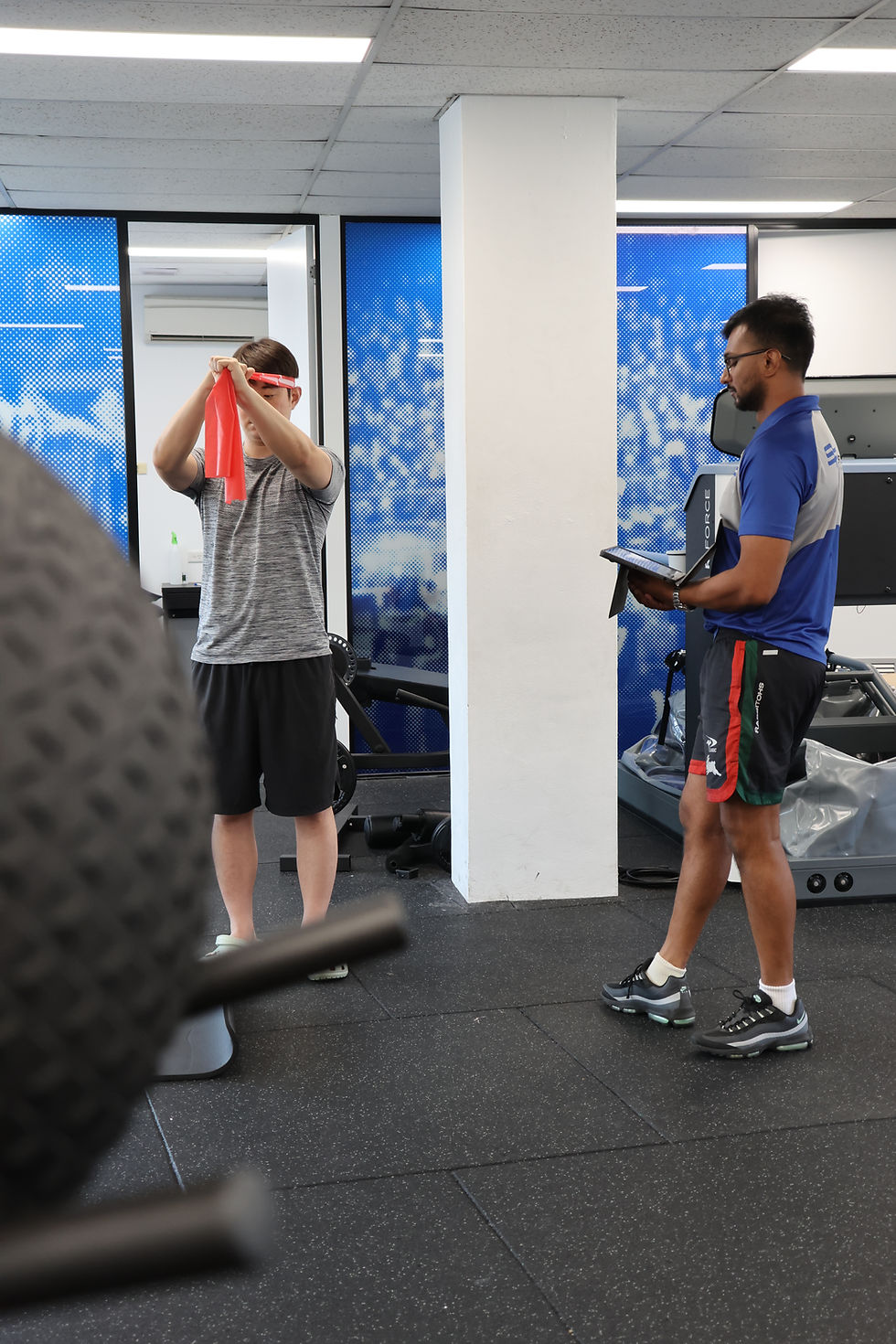
At SportsFit Physiotherapy, we specialise in running-related injuries and performance rehabilitation.
Our approach includes:
Detailed training load analysis
Individualised strength programs
Evidence-based return-to-run planning
Targeted gait retraining when appropriate
Our goal is not only to resolve your pain, but to help you return to running stronger and more resilient.
Book an Appointment
If outside knee pain is limiting your running, our team can help you get back on track.
Book an appointment with SportsFit Physiotherapy today.

Comments