
Calf Tears: What Actually Happens, How Long It Takes, and How We Treat It
Updated: Jul 30
In this article
What is a calf tear?
Grades explained
How it happens
Symptoms to watch for
How we assess it
Treatment at SportsFit
Return to sport timelines
Book an appointment
You were mid-sprint, pushing off a step, or just changing direction quickly — and suddenly your calf felt like someone had kicked you from behind. Except no one was there. That sharp, sudden pain in the back of your lower leg is one of the most recognisable sensations in sport, and unfortunately one of the most common reasons we see patients at our clinics in Five Dock and Gladesville.
Calf tears — or calf muscle strains — affect everyone from elite AFL players and weekend cricketers to runners doing laps around Five Dock Park. They're not complicated to understand, but they are easy to mismanage. Get the rehab right and you're back to full speed in a few weeks. Get it wrong and you're dealing with a re-tear six months later.
This guide covers everything you need to know — what's actually injured, how bad it is, and what good rehab looks like.
What is a calf tear?
The "calf" isn't a single muscle — it's a complex of muscles that run down the back of your lower leg, and which one gets injured matters quite a bit for how you manage it and how long recovery takes.
The main players are:
Gastrocnemius (the "gastroc")
The large, two-headed muscle you can see on the back of the leg. Crosses both the knee and ankle joints — which is exactly why it's so prone to injury. The medial (inner) head is by far the most commonly torn, accounting for the majority of calf strains in sport.
Soleus
Sits underneath the gastroc and only crosses the ankle. Soleus tears are less dramatic at the time of injury but often trickier to fully rehabilitate. Common in runners and cyclists — anyone doing sustained, repetitive loading at low to moderate intensity.
Plantaris
A small, thin muscle with a very long tendon that runs alongside the gastroc. Its rupture can mimic a gastroc tear in presentation and is often misdiagnosed. Largely irrelevant functionally — recovery is usually smooth.
Achilles tendon (adjacent structure)
Not technically part of the muscle belly, but the Achilles is the common tendon of both the gastroc and soleus. An Achilles tendon rupture presents similarly and must always be ruled out — it's a very different beast requiring very different management.
When we talk about a "calf tear," we're usually referring to a strain or partial tear of the muscle fibres themselves — not a complete rupture of the tendon. Most of the patients we see at SportsFit have gastrocnemius strains, though soleus injuries are increasingly common in our running population.
Grading the injury
Muscle strains are graded on a simple scale that reflects how much of the muscle has been affected. The grade determines your recovery window, how much you can load in the early stages, and whether imaging is warranted.
Grade 1 — Mild strain — microtears, less than 10% of fibres
Some tightness and discomfort, minimal swelling, still able to walk (though uncomfortably). Usually 1–2 weeks to return to sport with good management. Often under-appreciated by patients who push through too early.
Grade 2 — Partial tear — 10–90% of fibres
Clear pain at time of injury, often described as a "pop" or sudden sharp pull. Visible bruising within 24–48 hours in many cases. Walking is painful. This is the most common presentation we see in the Inner West sporting community. Recovery typically 4–8 weeks depending on location and severity.
Grade 3 — Complete rupture — full-thickness tear
Relatively rare for the muscle belly itself (more common at the musculotendinous junction or within the tendon). Severe pain, significant swelling and bruising, and inability to weight bear properly. Requires specialist assessment and in some cases surgical consultation. Recovery 3–6+ months.
Worth noting: grading from clinical examination alone has its limits. Where there's diagnostic uncertainty — particularly for higher-grade injuries or when an Achilles rupture needs to be excluded — we'll refer for diagnostic ultrasound. MRI is rarely necessary for isolated calf injuries but becomes relevant if surgery is being considered.
How does it happen?
Calf tears almost always occur during explosive or rapid loading of the muscle — when it's being asked to produce a lot of force, quickly, often while also being lengthened.
The classic mechanisms we see at SportsFit:
Explosive push-off
Sprinting from a standing start, pushing off for a jump, or accelerating sharply. Common in cricket (between-wicket running), AFL, and social football in the Inner West. The gastroc is under maximum load the moment the heel leaves the ground.
Rapid direction changes
Cutting, pivoting, or sidestepping movements where the foot is planted and the body twists over it. The combination of rotational load and calf activation is high-risk, particularly on firm surfaces.
Sustained running load (soleus)
Unlike the gastroc, the soleus often fails through volume rather than a single event. A runner who's ramped their weekly kilometres too quickly, changed surfaces, or returned from a break without building adequately is the typical picture. The pain often sneaks up during a long run.
Cold or under-prepared muscle
A cold, stiff calf asked to produce explosive effort — first play of the game, early morning park run, returning after a long rest on the bench — is mechanically less tolerant. The warm-up matters more than people think, particularly for athletes over 35.
Age is a genuine risk factor. The medial gastroc tear is so common in recreational athletes aged 35–55 that it even has a nickname — "tennis leg." It's not exclusive to tennis; we see the same pattern in cricket players, Five Dock footy veterans, and masters swimmers returning to dryland training.
Symptoms and what to look for
Calf tear presentations vary a lot depending on the grade and which muscle is involved, but the most common picture looks something like this:
At the time of injury:
Sudden, sharp pain in the calf — often described as a "kick," "snap," or "pop"
Inability or unwillingness to continue the activity
Feeling of the leg "giving way" momentarily
In the hours and days after:
Bruising (may appear 24–72 hours later, sometimes tracking down toward the ankle — this is normal)
Swelling and warmth in the calf
Pain on walking, especially pushing off the toes or going up stairs
Muscle tightness or a "knot" feeling in the belly of the calf
Signs that warrant urgent assessment:
Complete inability to weight bear or walk
Palpable gap or defect in the muscle or Achilles tendon
Calf pain with significant swelling, warmth, and redness — DVT must be ruled out
Loss of ankle movement or significant foot weakness
One thing worth flagging: calf pain after a long-haul flight, extended bed rest, or during pregnancy needs to be assessed before assuming it's a muscle strain. Deep vein thrombosis (DVT) can present with very similar symptoms and needs to be excluded before physical treatment begins.
How we assess it at SportsFit
When you come in to see us at Five Dock or Gladesville, we're doing a few things in the initial assessment:
First, we're confirming the diagnosis and ruling out anything that needs more urgent attention — particularly an Achilles tendon rupture, which presents very similarly but is a completely different injury. The Thompson test (squeezing the calf to check for passive ankle movement) is a quick and reliable screen we do on every calf presentation.
From there, we're looking at:
Location and depth of tenderness — distinguishing gastroc from soleus involvement, and identifying the likely zone of injury (musculotendinous junction tears tend to be more significant than pure muscle belly tears)
Functional capacity — what can you do right now? Walking, single leg calf raises, hopping? This tells us a lot about grade
Strength and range of motion — ankle dorsiflexion range and calf strength in multiple positions, because both the gastroc and soleus need to be isolated properly
Contributing factors — calf flexibility, footwear, training load in the weeks before injury, previous calf history (re-tears are common because scar tissue is less extensible than healthy muscle)
We'll also have an honest conversation about your sport, your timeline, and what your goals are. A cricketer in the middle of a Premier Grade season has different priorities to a runner who's just started their training block — and that shapes how we approach the rehab.
Treatment: what good calf rehab actually looks like
There are two things we see a lot that we'd push back on hard: complete rest, and rushing straight back to sport. Both are recipes for a longer recovery than necessary or an early re-tear.
Good calf rehab is progressive. It moves through stages, each building on the last, and the progression is based on your ability to hit clinical milestones — not just how many days have passed.
Stage 1: Early management (days 0–5)
The priority in the first few days is protecting the injured tissue while maintaining as much function as possible. Complete rest isn't the answer — but unloaded movement and good compression management is.
Ice and compression to manage swelling in the first 48–72 hours
Gentle, pain-free range of motion — ankle circles, light pumping movements
Walking with a small heel raise (inside the shoe) to offload the injured gastroc if walking is painful
Avoiding aggressive stretching — pulling a freshly injured muscle into stretch before it's ready is counterproductive
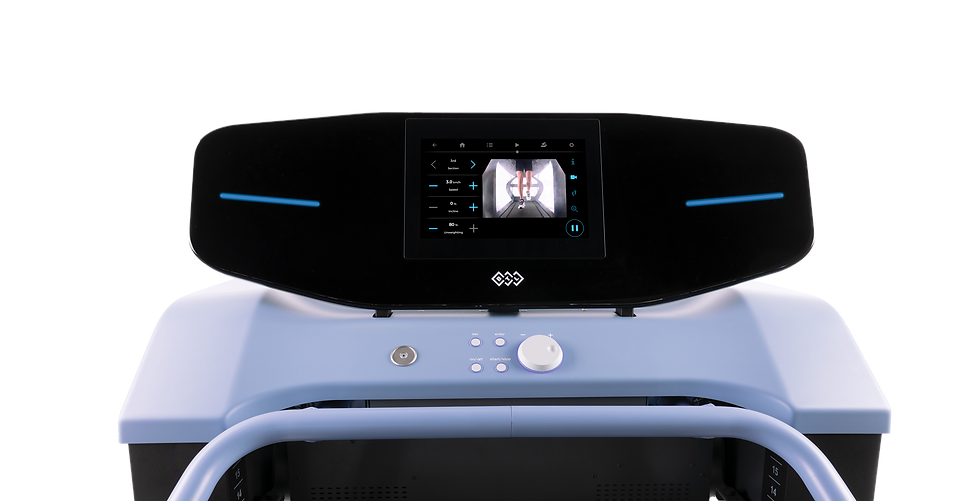
We also have access to the BTL R Force Anti-Gravity Treadmill at SportsFit Five Dock, which allows patients with acute lower limb injuries to begin walking with significantly reduced bodyweight — sometimes as early as day two or three, depending on severity. This means your cardiovascular fitness and walking mechanics stay active while the tissue heals, rather than losing ground over two weeks of couch rest. It's one of the reasons our athletes tend to bounce back faster.
Stage 2: Loading and early strength (weeks 1–3)
Once you can walk without significant pain, we start progressive loading of the calf. This is where the real rehabilitation begins.
Double leg calf raises progressing to single leg calf raises (straight knee targets gastroc; bent knee targets soleus)
Isometric loading — pushing against resistance without movement. Underused, but excellent for pain management and early tissue loading
Gym-based lower limb work that avoids direct calf stress — leg press, hip-dominant exercises, upper body maintenance
Soft tissue treatment to manage scar tissue formation and restore tissue extensibility
For more significant grade 2 tears or injuries at the musculotendinous junction, we may also use our BTL-6000 shockwave therapy as part of the rehab program. Shockwave is particularly useful during the subacute phase — stimulating collagen remodelling in the healing tissue, reducing local pain, and accelerating the biological processes involved in muscle and connective tissue repair. In the right patient at the right time, it genuinely shifts the timeline.
Stage 3: Progressive return to running (weeks 3–6+)
The return to running phase is where most DIY rehab falls apart. People feel better, they go for a jog, and then they re-tear — often at a similar or higher grade than the original injury.
The calf needs to be able to tolerate the specific demands of running before you run — not the other way around. That means:
Single leg calf raises — we want at least 20–25 pain-free reps before starting a return-to-run program
Hopping and bounding tests on the injured limb — symmetry with the other side is the target, not just "close enough"
Return to running via a structured walk-jog protocol, monitored for symptom response
Anti-gravity treadmill jogging as a bridge — building running mechanics and loading the tissue at 60–80% bodyweight before moving to full ground reaction force
Stage 4: Sport-specific training and return to play
The final stage is making sure the rehab matches the actual demands of your sport. Sprinting, change of direction, jumping, and reactive movements all place different demands on the calf — and we want all of them tested before you're back to full training.
For our cricket players (we work closely with several Premier Grade and social cricket clubs across Sydney), this means simulating between-wicket running, fast bowling run-ups, and fielding movements. For our AFL and football players from the Inner West Magpies and other local clubs, it means reactive agility, contested ground ball work, and game-intensity effort.
We don't tick the box just because you've completed your exercises. The goal is confident, pain-free, full-intensity sport — and we keep working until that's genuinely the case.
Recovery timelines: what to realistically expect
Grade 1 — Return to light activity: 3–5 days; Return to full sport: 1–2 weeks
Grade 2 — Return to light activity: 1–2 weeks; Return to full sport: 4–8 weeks
Grade 3 — Return to light activity: 2–4 weeks; Return to full sport: 3–6+ months
These are general guides. Soleus injuries often sit at the longer end of the range for their grade — they respond slower to loading and are more likely to linger if managed passively. Re-tears (second or subsequent calf injuries) also typically have longer timelines because scar tissue has different mechanical properties to healthy muscle.
Age is a real factor too. The biology of muscle healing is slower in your 40s and 50s than it is in your 20s — but good rehab can absolutely make up the difference.
Preventing the next one
Calf re-injury rates are high — somewhere between 30–40% for athletes who return to sport without properly completing their rehab. Here's what actually makes a difference:
Don't rush the return. "Pain-free" is not the same as "ready." The calf needs to be loaded, tested, and resilient — not just comfortable at rest.
Maintain calf strength during your season. Heavy slow resistance work (bent and straight knee calf raises with real load) is the single best injury prevention tool we have. Most athletes skip this.
Respect the warm-up. Particularly over 35. The muscle is stiffer and less tolerant of cold loading — ten minutes of progressive warm-up before explosive effort is worth more than it sounds.
Manage training load intelligently. Most overuse and fatigue-related calf injuries happen when volume spikes sharply — returning from a break, preparing for a big event, or switching surfaces. Build gradually.
Address the whole kinetic chain. Tight hip flexors, stiff ankles, and weak glutes all change how the calf is loaded. A proper screen can identify these before they contribute to an injury.
Dealing with a calf injury in the Inner West or Gladesville?
Whether you pulled your calf at Henley Oval, Five Dock Park, Gladesville Oval, or just walking up the stairs — our team at SportsFit can assess it the same day and get your rehab moving immediately.
Five Dock (Flagship) — Great North Road, Five Dock NSW
Gladesville — Gladesville NSW
**Book online or call us directly — we offer same-day appointments for acute injuries.**


Comments