
Sydney Marathon Running Assessment in Gladesville

Why a running assessment matters more in the build than in race week
Most of the runners who come in for a Sydney Marathon running assessment at our Gladesville clinic arrive at the same point in the program: somewhere between week six and week ten, when the long run pushes past 25km and the weekly total sits in the 50s or 60s. That is where the niggles surface. Achilles tightness in the first kilometre. A calf that grumbles on hills. Shin soreness that shows up on the second half of the long run and disappears by Monday.
The useful time to look at all of this is while there is still training left to change. A week out from race day, your options are limited to managing symptoms and adjusting the plan. Twelve weeks out, you can actually build the capacity the distance asks for.
What we look at in a marathon running assessment
The session starts with your training history in detail, not in summary. Weekly kilometres for the past two months, how the long run has progressed, what your session split looks like, whether you have had a break, and what happened last time you trained for a distance event. Runners often describe a build as steady when the numbers show two jumps of 30% and a week off in the middle.
From there we test rather than guess. Calf capacity is the one that matters most for marathon runners, because the calf complex absorbs a large share of load every stride and fatigues progressively over distance. We test single-leg calf raise capacity at both a straight and bent knee, and compare left to right. Hip and groin strength goes on the VALD ForceFrame, which gives numbers for adductor and abductor strength that we can retest later instead of relying on a hands-on impression. AxIT force plates let us look at how you load each leg through hopping and single-leg tasks, and how much force you lose when fatigued.
We also watch you run. Treadmill filming from behind and the side, at your easy pace and at goal marathon pace, since running mechanics change with speed. What we are looking for is not a textbook stride. It is whether what you do is consistent with the tissue that is complaining, and whether cadence, foot placement or trunk control are contributing.
Footwear gets a look too, including how many kilometres are on your current shoes and whether you plan to race in something different from what you have trained in.
The problems that show up most often
Achilles tendinopathy and posterior tibial bone stress account for a large share of what we see in a marathon build, and both are load problems before they are anything else. Tendon pain tends to be worst at the start of a run, ease as you warm up, and be stiff the next morning. Bone stress behaves differently: it typically worsens as the run goes on and becomes more localised over time. That distinction changes what we do next, which is why the history matters so much.
Calf strains are the other common one, particularly in runners over 35 who have added speed work on top of increasing volume. Plantar heel pain and lateral hip pain usually come with a story of a fast volume increase or a lot of new hill work.
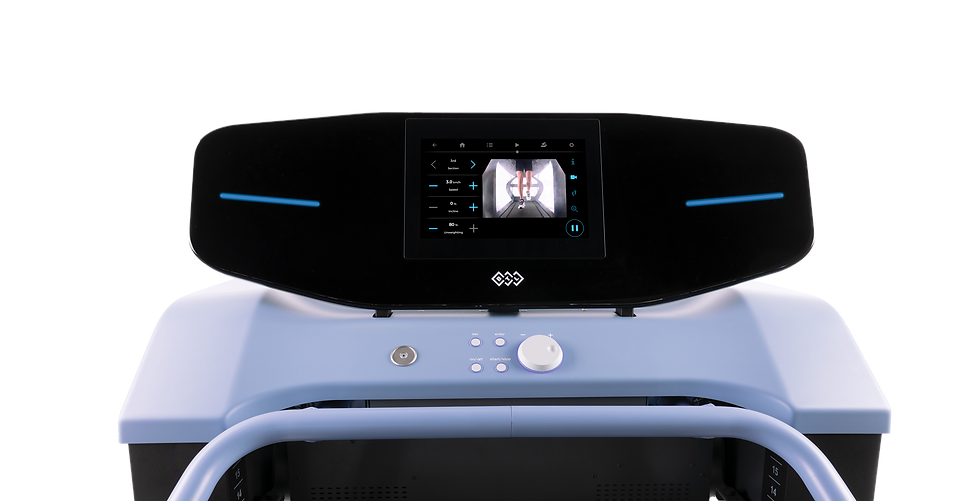
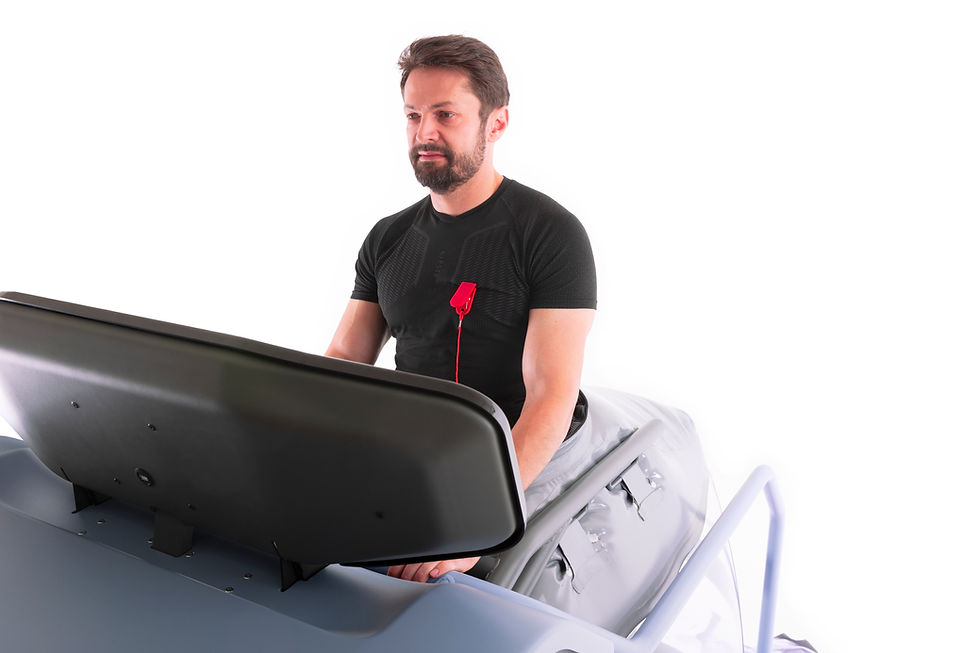
If you need to keep aerobic fitness while a bone or tendon issue settles, our anti-gravity treadmill lets us reduce effective bodyweight through the run so we can lower load without dropping running entirely. It was one of the first in Australia and it earns its place most in exactly this situation, where a runner has ten weeks left and cannot afford six of them off their feet.
Strength and conditioning alongside the program
Running volume alone does not build much strength in the calf, glutes or trunk, and marathon programs rarely leave room for a well-planned gym session to be invented from scratch each week. Our strength and conditioning classes at Gladesville run in a large gym space and are built to sit around a running week rather than compete with it: heavier lower-limb work early in the week when legs are fresher, and lighter, more specific calf and hip work on the days either side of the long run.
Sessions are one-to-one when you are being assessed or rehabbed, with no double-booking, so testing and retesting happen properly. In the classes, the programming is individual even though you are training alongside others. A runner managing Achilles symptoms and a runner chasing a sub-3:30 are doing different things in the same room.
When to get seen rather than wait
Book in if pain has lasted longer than about a week of easy running, if it is making you change your stride, if it is sharpening and narrowing to one spot on the bone, or if it wakes you up. Also worth getting assessed if you have had to skip two or more key long runs, because the plan itself probably needs restructuring before the tissue does.
If you are training for the Sydney Marathon and something is not settling, come in and get it assessed properly while there is still time in the build to act on it.
Read more about our running services.
We go deeper on running at sydneyrunningperformance.com.au.
If you would like it assessed at our Gladesville clinic, you can book a running assessment.


Comments