
Shin Splints Treatment in Gladesville: Physio Guide


What shin splints actually are
Shin splints is the common name for medial tibial stress syndrome, pain along the inner border of the shin bone that builds during running and settles with rest. It usually covers a diffuse band several centimetres long on the lower third of the tibia, and it is tender to press along that whole stretch rather than at one pinpoint spot.
The mechanism is bone and the tissue attaching to it being loaded faster than they can adapt. Bone responds to running load by remodelling, which involves a temporary period where it is weaker before it gets stronger. Run through that window too often and the shin stays irritated. That is why shin pain so often shows up in the first three or four weeks of a pre-season, or in the fortnight after someone adds a parkrun and two extra weekday sessions.
Typical pattern: sore for the first kilometre, eases as you warm up, returns worse afterwards and is stiff the next morning. When that pattern changes so the pain arrives earlier each run and no longer warms up, the picture has shifted and needs looking at properly.
Shin splints, or something else
Three other things cause shin pain in runners and footballers, and they are managed differently.
A tibial stress fracture is focal. The tenderness sits over a small area you can cover with a fingertip, often with night ache, and hopping on that leg reproduces it sharply. This warrants imaging rather than a loading program.
Chronic exertional compartment syndrome gives tightness, cramping or a dead feeling in the shin that comes on at a predictable distance, forces you to stop, and disappears within minutes of stopping. Numbness or foot slap during running points this way too.
Tendon-driven pain, usually tibialis posterior, is more specific to resisted movement and tends to sit lower, behind the inner ankle bone.
Sorting these out is most of the value of a first appointment. The treatment for one is close to the opposite of the treatment for another.
What assessment looks like at Gladesville
We start with the training history in detail, because that is where the answer usually sits. Kilometres and sessions per week over the last six weeks, surface, footwear age, what changed, and what else you are doing. A rugby or football player adding three repeat-sprint sessions on hard winter grounds at Gladesville ovals has a different problem from someone building toward a half marathon on the Parramatta River paths.
Then the physical side. Palpation to map exactly where the tenderness sits and how long it runs. Single-leg hop and hop-to-pain to gauge bone irritability. Calf capacity testing, because heel raise endurance is often well short of what repeated running demands, and the calf is the main shock absorber the tibia relies on. We use AxIT force plates to measure single-leg push-off and landing forces objectively, and ForceFrame for hip and ankle strength, so we have numbers to compare against later rather than a guess about whether things feel stronger.
We also watch you run. Cadence, how far in front of your body you land, trunk position and how much the ankle and knee are absorbing.
What treatment involves
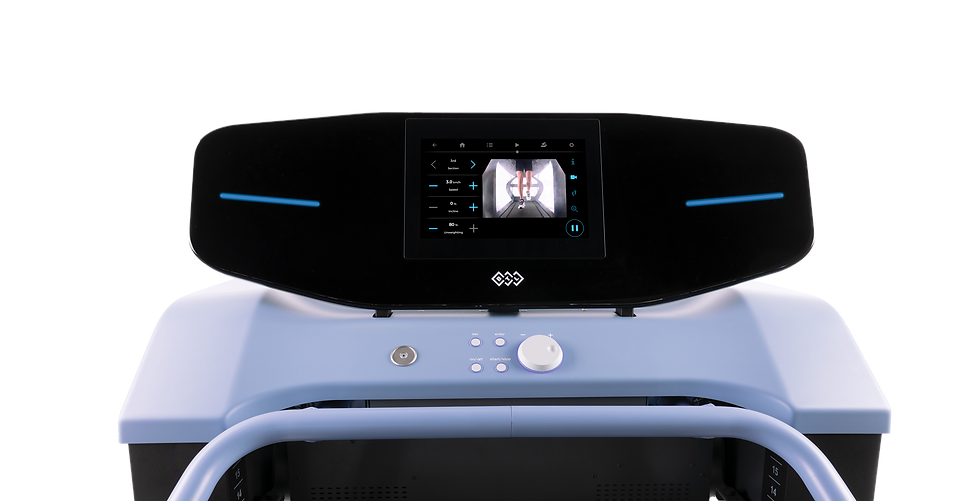
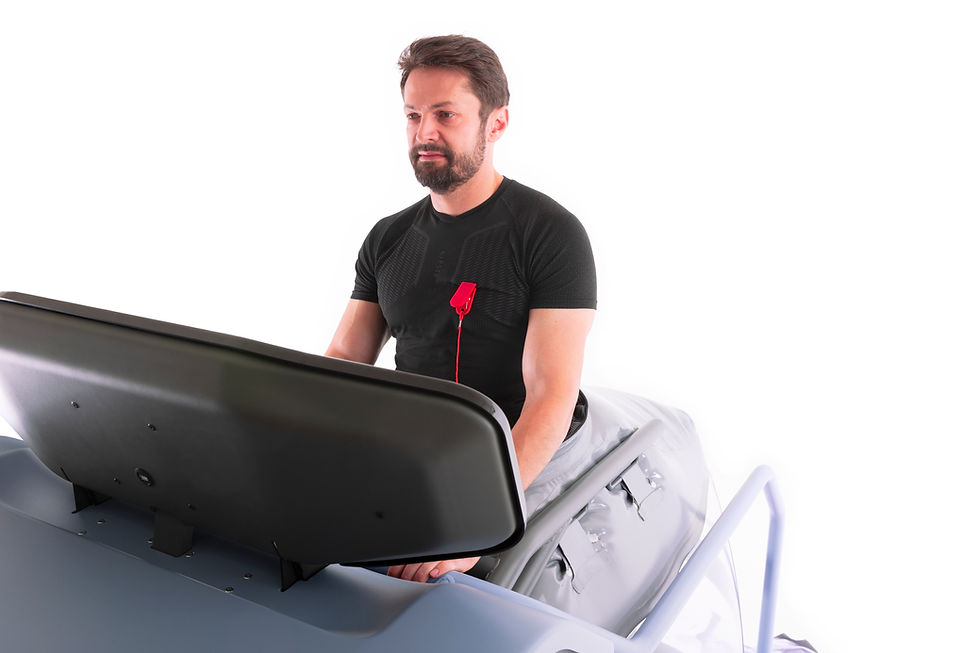
The first job is bringing total bone load down far enough that symptoms settle, without stopping everything. For most people that means cutting running volume rather than eliminating it, shifting some of it to cycling, swimming or the anti-gravity treadmill. The anti-gravity treadmill lets you run at a percentage of body weight, so a runner can hold running mechanics and some aerobic work while the tibia takes a fraction of the usual impact. It is one of the reasons we can keep people moving while the bone settles.
Alongside that, calf and foot strength work. Loaded heel raises through full range, progressing from two legs to one, from slow to fast, then into hopping and bounding once symptoms allow. Hip and trunk strength where testing shows a gap. Soleus gets particular attention because it carries the largest load during running.
Running retraining can help in some cases, commonly a small cadence increase or a change in foot strike position, though we only change mechanics where the assessment suggests it is contributing.
Shockwave therapy is sometimes used as an adjunct for persistent medial tibial pain. We discuss whether it suits your presentation rather than applying it to everyone.
Returning to running
Return is graded, not binary. We build back using a run-walk structure, increasing time on feet before intensity, and we watch two things: pain during the session and how the shin feels at the 24-hour mark. Soreness that settles overnight is usually acceptable. Soreness that is worse the next morning means the step was too big.
For team sport athletes we add change of direction, acceleration and repeated sprint work before full training, because straight-line running tolerance does not automatically carry over to a Saturday game.
If your shins have been sore for more than two or three weeks, or the pain has become focal, book an assessment at our Gladesville clinic and we will work out which problem you are actually dealing with.
Read more about our running services.
We go deeper on running at sydneyrunningperformance.com.au.
If you would like it assessed at our Gladesville clinic, you can book a running assessment.

Comments