
Achilles Tendinopathy in Hyrox Athletes - Causes, Treatment & Return to Running | SportsFit
Achilles Tendinopathy in Hyrox Athletes -Causes, Treatment, and How to Keep Running
Achilles tendinopathy is one of the most frequently mismanaged injuries in recreational sport. Athletes rest until the pain settles, return to training, and the cycle repeats - often for months. For Hyrox athletes specifically, where running volume is non-negotiable in race preparation, understanding how to manage Achilles tendinopathy correctly is essential.

Understanding the Achilles Tendon
The Achilles tendon connects the gastrocnemius and soleus muscles of the calf to the calcaneus (heel bone). It is the largest and strongest tendon in the body, capable of withstanding forces several times bodyweight during running and jumping. Despite its strength, it is highly susceptible to overload when training loads are increased rapidly or when cumulative load consistently exceeds the tendon's adaptive capacity.
Achilles tendinopathy occurs when the tendon's internal structure undergoes pathological change in response to this accumulated overload. The result is a tendon that is thickened, disorganised at a structural level, and painful under load. Crucially, this is not primarily an inflammatory process — which is why rest and anti-inflammatory medication address the symptom but not the underlying pathology.
Why Hyrox Creates Achilles Risk
Hyrox race preparation involves substantial running volume - athletes training for their first event often increase weekly running distance significantly over a relatively short period. For athletes coming from a strength training background with limited running history, this represents a rapid and substantial increase in Achilles tendon load.
The ski erg adds a further layer of calf-dominant loading that is often underestimated. The pulling motion of the ski erg requires significant plantar flexion force - the same movement pattern that loads the Achilles during running. Athletes who train the ski erg heavily alongside increasing running volumes are compounding Achilles load from two directions.
Contributing factors include insufficient calf strength relative to training load, reduced ankle dorsiflexion range (which increases Achilles strain during running), and training surfaces - harder surfaces generate greater ground reaction forces and therefore greater tendon load.
Recognising Achilles Tendinopathy
The presentation of Achilles tendinopathy is characteristically located 2-6cm above the heel - the mid-portion of the tendon - though insertional presentations at the heel bone also occur. Key features include:
Morning stiffness and pain with the first steps after waking or after prolonged sitting are early hallmarks. Pain that settles after warming up, only to return with sustained training or the following day, is typical. Local thickening of the tendon is often palpable. A single-leg heel raise test that reproduces pain is a reliable clinical indicator.
These symptoms should not be dismissed as normal training soreness. Achilles tendinopathy identified early responds significantly better to treatment than chronic presentations.
Evidence-Based Treatment
The foundation of Achilles tendinopathy rehabilitation is a progressive loading program targeting the gastrocnemius and soleus. The Alfredson eccentric heel drop protocol has the longest evidence base, but more recent research supports heavy slow resistance training - bilateral and single-leg calf raises performed slowly through a full range of motion under significant load - as equally or more effective, particularly for mid-portion presentations.
Isometric calf exercises - sustained holds at end range - are useful in the acute phase for pain management and can be performed immediately without aggravating the tendon. They provide an analgesic effect that allows continued training with reduced pain.
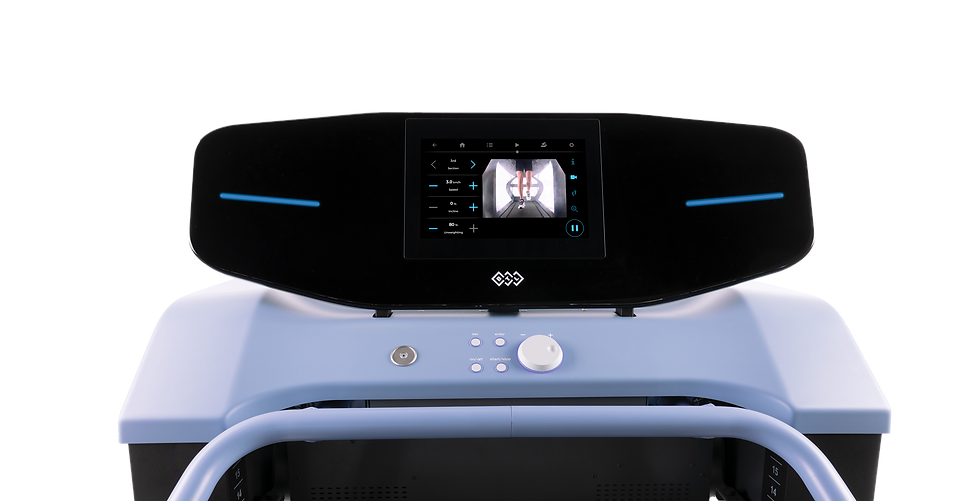
Running does not need to stop entirely. Load modification - reducing distance, avoiding hills, adjusting pace - combined with the introduction of a structured loading program allows most athletes to continue training throughout rehabilitation. Our anti-gravity treadmill is a particularly effective tool for Achilles presentations, enabling athletes to maintain running fitness at a reduced percentage of bodyweight while the tendon is managed.
What to Avoid
Prolonged rest is counterproductive - the tendon requires load to adapt and recover. Aggressive stretching of an irritated Achilles can compress the tendon at its insertion and worsen insertional presentations. Cortisone injections have a limited role and carry risk of tendon weakening with repeated administration. These approaches should only be considered in conjunction with, not instead of, a structured loading program.
If you are experiencing Achilles symptoms during Hyrox training, early assessment produces significantly better outcomes than waiting. Our physiotherapists at SportsFit will conduct a thorough clinical assessment, establish an accurate diagnosis, and build a rehabilitation plan that keeps you as active as possible through recovery.
Book a Hyrox injury assessment at our Five Dock or Gladesville clinics. No referral required.


Comments