
Sydney Marathon Prep: A Physio Guide at Five Dock

The weeks where marathon blocks tend to unravel
Most of the runners we see for Sydney Marathon prep at our Five Dock clinic don't turn up in week one. They turn up somewhere between the 25km and 32km long runs, when weekly volume has climbed past what their calves, Achilles or hips have handled in years. The complaint is rarely dramatic. A calf that tightens at 18km. A knee that only talks on the downhills. A heel that hurts for the first ten minutes of every run and then settles.
That pattern matters because it changes what you should do next. A niggle that appears at a predictable distance is usually a capacity problem, not a tissue that has torn. Capacity problems respond to different decisions than acute injuries do, and the sooner you know which one you have, the fewer long runs you lose.
What a running assessment involves
A running assessment at Five Dock starts with your training log, not your gait. We want the last eight to twelve weeks: weekly kilometres, the jump between them, how many sessions were on the treadmill versus road, what your shoes are and how far they've gone, and where the pain sits inside a run. A 40 per cent week-on-week volume jump explains more than any video ever will.
From there we test. We use VALD ForceFrame to measure hip and hamstring strength side to side, and AxIT force plates to look at single-leg push-off, hop performance and how symmetrically you load each limb. Calf endurance gets tested directly, because the calf complex absorbs a large share of the work in distance running and it is the structure most commonly underdone in runners who came to the sport from other sports. We compare left to right and look at how quickly you fatigue, then repeat the same tests later in the block to see whether the strength work is landing.
We also run you on the treadmill and film it. Cadence, ground contact, trunk position and how you handle a downhill grade all get looked at, but the video is read alongside the strength numbers rather than on its own. A visible movement pattern means something different in a runner with strong, symmetrical calves than in one whose right side fatigues at half the reps of the left.
Plan for the hills, not just the distance
The Sydney Marathon course asks for things a flat training block doesn't prepare you for. There is real climbing in the first third, a stretch of long rolling hills through the eastern suburbs in the back half where most people's pacing plans come apart, and enough sustained downhill running to leave quads and calves badly cooked if they haven't practised it.
Downhill running is the piece Inner West runners most often skip, partly because a lot of the local training loops around Bay Run and Canada Bay are flat and forgiving. Eccentric loading on descents produces more muscle damage than the same effort on the flat, and it is a common reason a runner who felt fine at 30km cannot hold pace at 36km. We build specific downhill exposure into the last part of a block, at controlled volumes, so race day isn't the first time your quads meet that stimulus.
Training through a niggle without losing the block
Stopping running entirely for two weeks in the middle of a marathon build costs more aerobic fitness than most runners can rebuild before the start line. Where it is clinically appropriate, we look for ways to keep the aerobic work going while loading the sore tissue more gently.
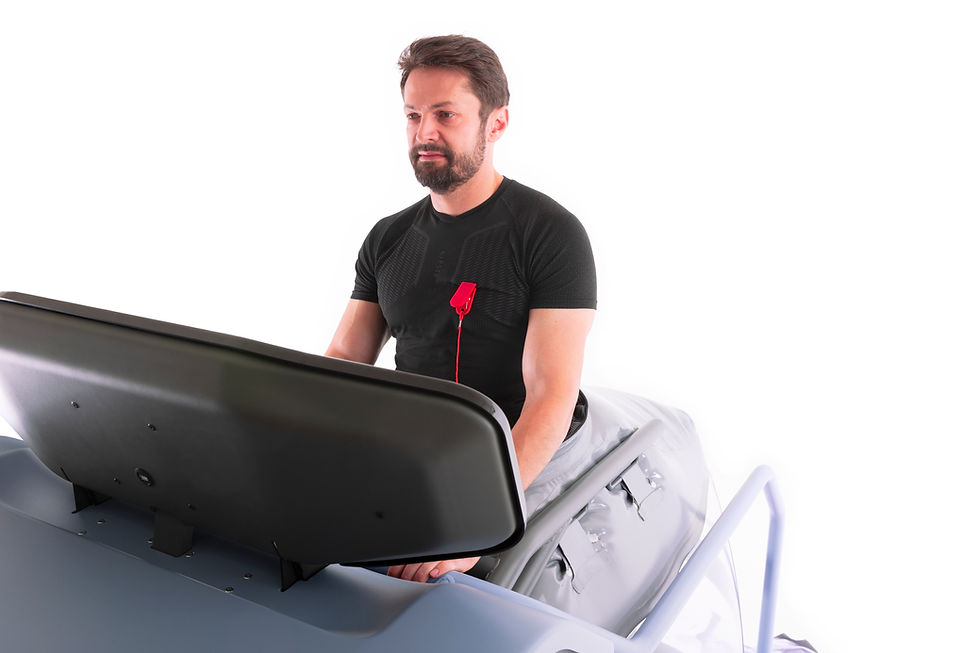
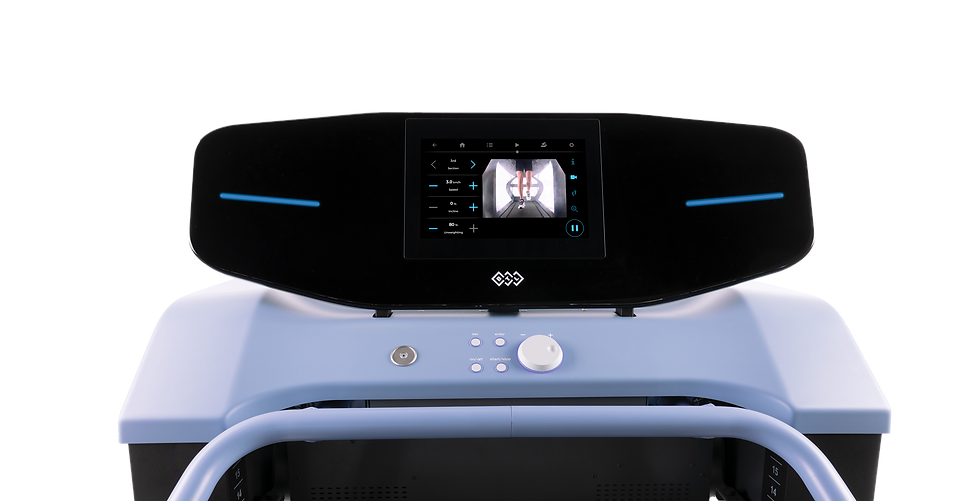
Our anti-gravity treadmill lets us reduce effective bodyweight in small increments, which can mean running at a percentage of bodyweight while the tissue tolerates more load week by week. For persistent tendon problems, shockwave therapy is one of the approaches we may discuss alongside a progressive loading program. Neither replaces the loading work. They are tools for keeping volume in the legs while the strength side catches up.
Strength work that fits around a marathon block
Our strength and conditioning classes at Five Dock are group sessions with individual programming, capped so you get actual coaching rather than a follow-along circuit. For a runner mid-block, the priority is usually heavy, low-volume calf and posterior chain work, single-leg loading, and enough plyometric exposure to keep tendons stiff and springy. Two sessions a week is often enough, scheduled away from your quality run days so they don't eat into your long run.
We program these around your race date, so the loading gets heavier in the middle of the block and tapers with your running rather than sitting on top of a peak mileage week.
When to get it looked at
Get assessed if pain is climbing week to week rather than staying flat, if it changes how you run, if it lingers more than an hour after you stop, or if you feel a sharp localised spot on a bone that hurts when you press it. Bone-related pain in the shin, foot or hip needs an early conversation rather than a wait-and-see approach.
Also worth booking if nothing hurts and you simply want a baseline before volume climbs. Strength and capacity testing at the start of a build gives you something to compare against later, which is far more useful than testing for the first time when something already aches.
If you're building towards the Sydney Marathon and something isn't sitting right, come in and get it assessed.
Read more about our running services.
We go deeper on running at sydneyrunningperformance.com.au.
If you would like it assessed at our Five Dock clinic, you can book a running assessment.


Comments