
Sports Physio Inner West: What to Expect at Five Dock

What a sports physio actually does differently
Plenty of physiotherapy is about settling a sore joint down. A sports physio approach in the Inner West has to go further than that, because the person in front of you has a Saturday game, a Sunday long run, or a season they are trying to finish. The job is working out what tissue is irritated, what load caused it, and what has to change in training so the same thing does not happen in six weeks.
That means assessment goes past the painful spot. If you are a runner with Achilles pain, calf capacity, ankle stiffness, cadence and weekly kilometre jumps all matter. If you are a front-rower with shoulder pain, the way you absorb contact matters as much as your rotator cuff strength. Treating only the sore bit tends to leave the reason for the problem untouched.
The sport we see around Five Dock
Five Dock sits between a lot of active ground. The Bay Run loop at Iron Cove is roughly 7km of flat bitumen and it draws everyone from first-time joggers to marathon blocks, which is why calf, Achilles, shin and knee complaints are common through winter and again in the lead-up to spring events. Timbrell Park and Five Dock Park carry football and cricket, Concord Oval carries rugby, and the local gyms and Hyrox-style training groups produce a steady stream of knee, hip and low back presentations from sled work, wall balls and heavy carries.
The pattern changes across the year. Pre-season brings hamstring and groin strains as sprint exposure jumps after months of nothing. Mid-season brings ankle sprains, AC joint injuries and tendon pain that has been grumbling since round three. Off-season is when knee reconstructions and long-standing tendinopathy finally get proper attention.
What happens in the first appointment
The first session at our Five Dock clinic runs one-to-one, and we do not double-book, so the time is yours. Most of it is spent on two things: history and testing.
The history is detailed on purpose. When did it start, what were you doing in the two weeks before, how much had training changed, what happens in the first ten minutes of warm-up versus the last ten minutes of a game, what settles it, what it does the next morning. For tendon problems especially, the 24-hour response tells us more than how it feels while you are on the table.
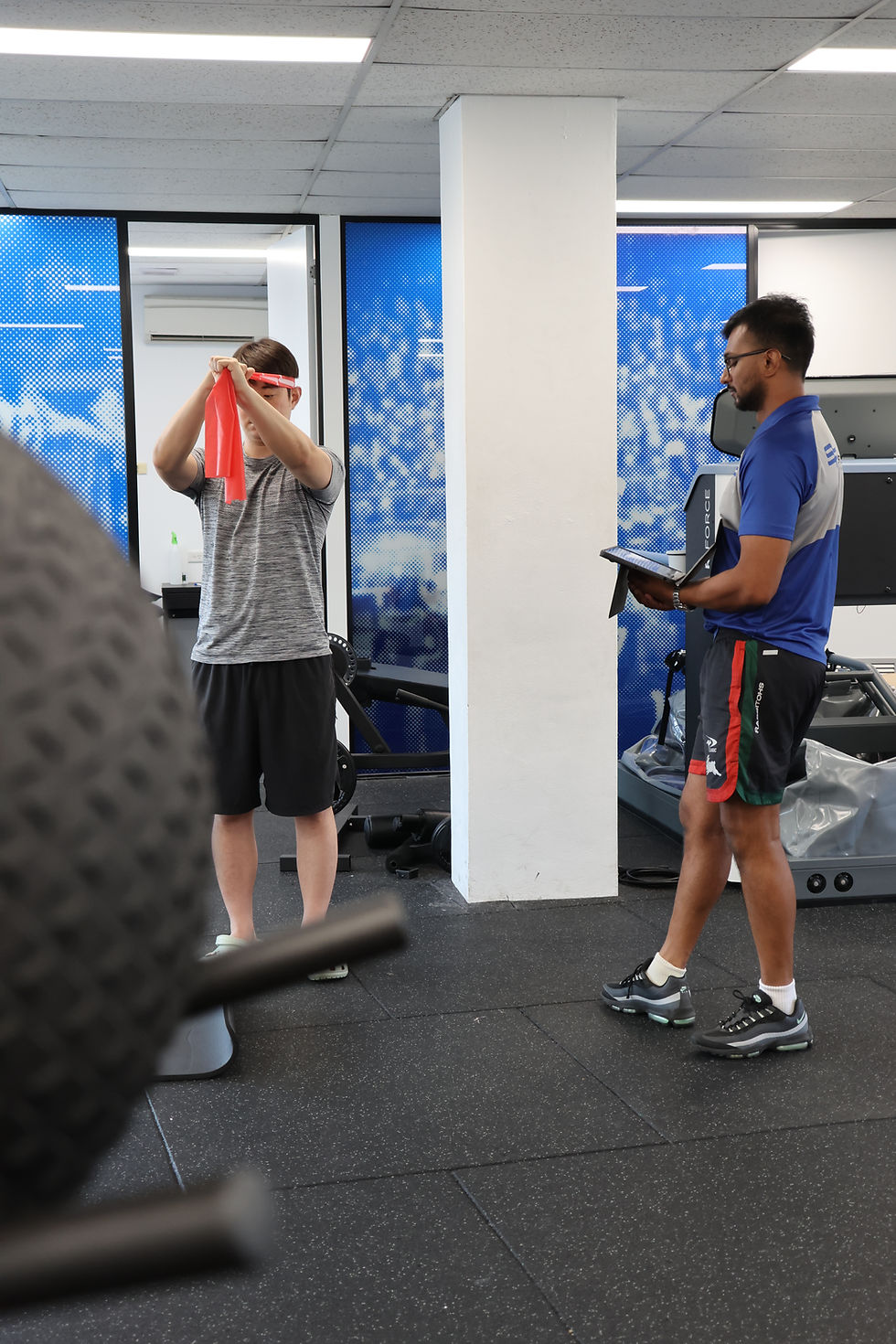
Then we test. Range of motion, strength through relevant angles, single-leg control, hop and landing quality if that is appropriate to the injury, and sport-specific movements where the pain shows up. If your problem only appears at speed, we would rather see you run than guess from a static test.
Objective testing, not just how it feels
We use VALD ForceFrame and AxIT force plates to measure strength and force output rather than estimating it by hand. Hand-held testing struggles to detect the sort of 10 to 15 percent side-to-side differences that matter for a hamstring or a reconstructed knee, and it cannot compare today's number to the one from six weeks ago with any precision.
Having numbers changes the conversation about returning to sport. Instead of "it feels alright," you get a measured comparison between limbs, a record of how strength is tracking, and specific targets to work toward. It also shows where you have plateaued, which is often the point at which the program needs changing rather than more of the same.
Treatment and the gym floor
Hands-on work has a place. Soft tissue treatment, joint mobilisation and dry needling can help reduce pain and improve movement enough to load a limb properly, and we use them as part of a plan rather than as the plan.
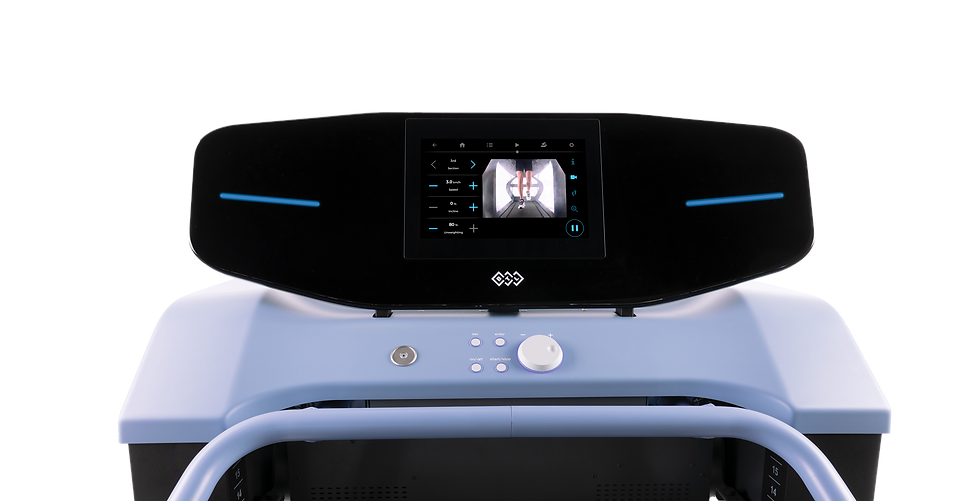
Most of the progress happens in the gym space. You will be given strength work that is heavy enough to matter, progressed on a schedule, and matched to your sport's demands. For lower limb injuries we may use the anti-gravity treadmill, which unloads a percentage of body weight so running mechanics can be reintroduced earlier than full-weight running allows, and shockwave therapy is available for some stubborn tendon and plantar presentations. Which of these gets used depends on the diagnosis and stage, and we will explain the reasoning before starting anything.
Rehab should also look like your sport at some point. Change of direction, deceleration, repeated sprints, contact tolerance, whatever the game asks of you. Finishing rehab at the point where walking is comfortable is how people end up back in the clinic in a month.
Funding and referrals
We see private patients, EPC/Medicare referrals, CTP claims after motor vehicle accidents, workers' compensation, and NDIS participants. You do not need a referral to book a private appointment. If your injury sits under a claim, bring the claim number and insurer details so we can sort the paperwork before the first session rather than during it.
When to get it looked at
See someone if pain has not improved over two weeks of sensible training changes, if it is worsening week to week, if you felt a sudden pull or pop, if a joint swelled within a few hours, or if you cannot put weight through the limb. Niggles that only bother you at the end of a session are worth assessing too, since they are usually easier to manage before they force you out of the team.
If you play or train anywhere around the Inner West and something is not settling, come in and have it properly assessed.
Read more about our general services.
If you would like it assessed at our Five Dock clinic, you can book a free injury assessment.

Comments