
Shin Splints Treatment in Five Dock: A Physio Guide


What people mean by shin splints
Most people who come in for shin splints treatment in Five Dock are describing an ache along the inside edge of the shin bone that shows up a few minutes into a run, eases once they warm up, then returns worse afterwards. The clinical label is usually medial tibial stress syndrome: irritation of the tibia and the soft tissue attaching to it, driven by repeated loading the bone and calf complex have not been prepared for.
It is a load problem more than a technique problem. The tibia responds to running and jumping by remodelling. When the volume, intensity or surface changes faster than that remodelling can keep up, the bone and surrounding tissue get sore. Preseason is the classic trigger. So is jumping from two runs a week to four, moving from grass to footpaths, adding hill repeats, or returning to netball training after a long off-season.
Shin pain that is not shin splints
Several different problems produce pain in the same region, and they need different management, so the first job in the room is sorting out which one you have.
A tibial stress fracture is further along the same bone stress spectrum. Pain tends to be focal, often within a small area you can cover with two fingertips, and it stops being something you can run through. Pain at rest, at night, or during walking pushes suspicion higher, and imaging may be appropriate.
Chronic exertional compartment syndrome usually behaves differently again: tightness, pressure or numbness that builds predictably at a certain distance or pace and settles within minutes of stopping, often with both legs affected the same way.
Tibialis posterior tendon irritation sits lower and behind the inside ankle bone, and is more provoked by single-leg heel raises than by bone palpation. Referred pain from the lumbar spine or a calf strain can also masquerade as shin pain.
What assessment looks like
At the Five Dock clinic, a first appointment for shin pain runs about an hour and starts with the training history in detail. Weekly running volume for the last month, session types, footwear age and model, surfaces, court or field time, plus what else changed. Sleep, illness, a new job on your feet, and for female athletes, menstrual cycle status and any history of low energy availability, since these all influence bone loading capacity.
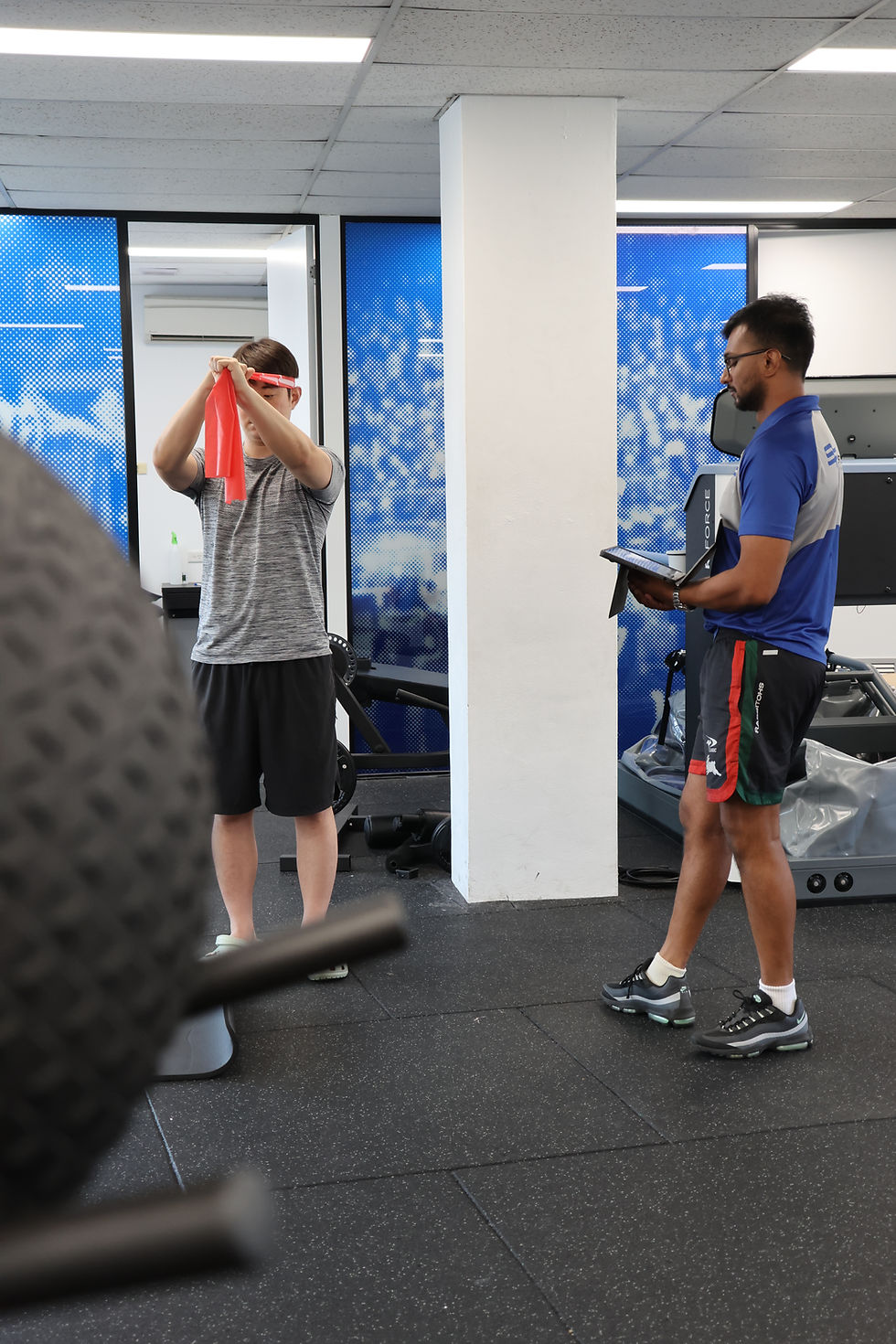
Then the physical side. Palpation along the medial tibial border to map where and how large the sore area is. Single-leg hop and load tolerance tests. Calf endurance measured properly, counting single-leg heel raises to fatigue rather than guessing, because a runner who manages 12 controlled reps has a very different starting point to one who manages 28. Ankle dorsiflexion range, foot posture under load, hip and trunk control on a single leg.
We also use AxIT force plates to get numbers on calf and quad strength and on how force is shared between legs during hopping and jumping. That matters for shin splints because the calf acts as a shock absorber for the tibia, and side-to-side deficits often explain why one shin complains and the other does not. Those numbers become the retest markers later, instead of relying on how you feel on the day.
What treatment involves
Early on, the aim is to reduce the loading the tibia is getting while keeping you training. That rarely means complete rest. It usually means adjusting run volume and intensity, changing surfaces, temporarily lifting cadence slightly to reduce impact per step, and swapping some running for cycling, rowing or water work.
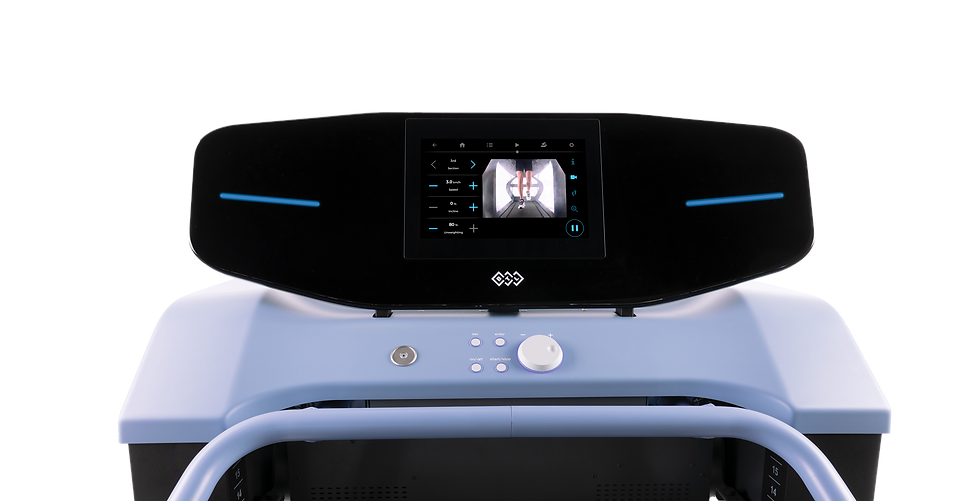
The anti-gravity treadmill is genuinely useful here. It unloads a percentage of your body weight so you can keep running mechanics and aerobic work going at reduced impact, then step the loading back up in measurable increments as tolerance improves. For a runner mid-block, or a footballer trying to hold conditioning through a shin issue, that is often the difference between a controlled interruption and a lost season.
Alongside that, we build calf and foot strength. Progressive heel raises through range, isometric holds where irritability is high, then loaded work and plyometric progressions in the gym space so the tibia is exposed to impact deliberately and gradually rather than accidentally. Hands-on work and soft tissue treatment can help with symptoms and comfort, and shockwave therapy is sometimes considered for stubborn cases, but the strength and loading side does the structural work.
Every session is one-to-one with the same person, no double-booking, which matters when you are progressing running loads week by week and need someone who remembers exactly what you ran last Tuesday.
Timeframes and when to get it looked at
Bone stress problems respond over weeks rather than days, and the range is wide depending on how long it has been going, how irritable it is, and what your training demands look like. Someone catching it two weeks into a niggle usually has more options than someone who has been running through it since March.
Worth getting assessed sooner rather than later if the pain has moved from an after-run ache to something present during warm-up, if it hurts when you walk, if it wakes you at night, or if the tender area is small and sharply defined. Those features change what we do first.
If shin pain has been limiting your running or your season, come in and have it assessed properly so you know what you are actually dealing with.
Read more about our lower limb services.
We go deeper on lower limb at innerwestantigravitytreadmill.com.au.
If you would like it assessed at our Five Dock clinic, you can book a free injury assessment.

Comments