
Physio in the Inner West: How Rehab Is Structured

What people usually want to know before booking
Most people searching for a physio in the Inner West aren't after a lecture on anatomy. They want to know how many sessions this is likely to take, what happens in the room, and whether they'll be doing anything more useful than lying on a bed with a heat pack. Fair questions. Here's how a course of rehab is structured at our Five Dock clinic, and why it's built that way.
The first session sets the plan, not the treatment
A first appointment runs one-on-one with the same physiotherapist for the full time. We don't double-book, so nobody is parked on a machine in the corner while the physio ducks into another room.
The session starts with a proper history. When did it start, what were you doing, what makes it worse, what does your week actually look like. A 41-year-old playing Saturday football in the Inner West league and a 16-year-old training four nights a week have different problems even with the same diagnosis, because the load they need to return to is different.
Then we test. That means range of motion, strength through relevant ranges, how you move under load, and specific tests for the structures we suspect. Where it's useful we use VALD ForceFrame for isometric strength testing and AxIT force plates for jumping, hopping and single-leg push. Those give a number for the injured side against the other side, which matters later when you're asking whether you're ready to play.
You should leave that first session knowing what we think is going on, what we're going to do about it, roughly how often we want to see you, and what you're doing between now and next time.
Early phase: settle the irritability, keep loading what you can
In the first week or two the aim is usually to bring symptoms down to a level where you can start working. That might involve hands-on treatment, dry needling, taping, changes to your training volume, and in some tendon cases shockwave therapy alongside a loading program.
Passive treatment is used to make loading possible, not instead of it. Even early on, most people are given something to do: isometric holds for an irritable tendon, hip and calf work for a knee, breathing and graded movement for an acute back. If you're a runner, we'd rather modify your running than stop it outright where that's reasonable. The anti-gravity treadmill at Five Dock lets us take a percentage of bodyweight off so someone can keep running at a reduced load while the injured tissue tolerates more, which is useful after calf tears, stress-related bone injuries and post-operative knees.
Middle phase: this is the part that does the work
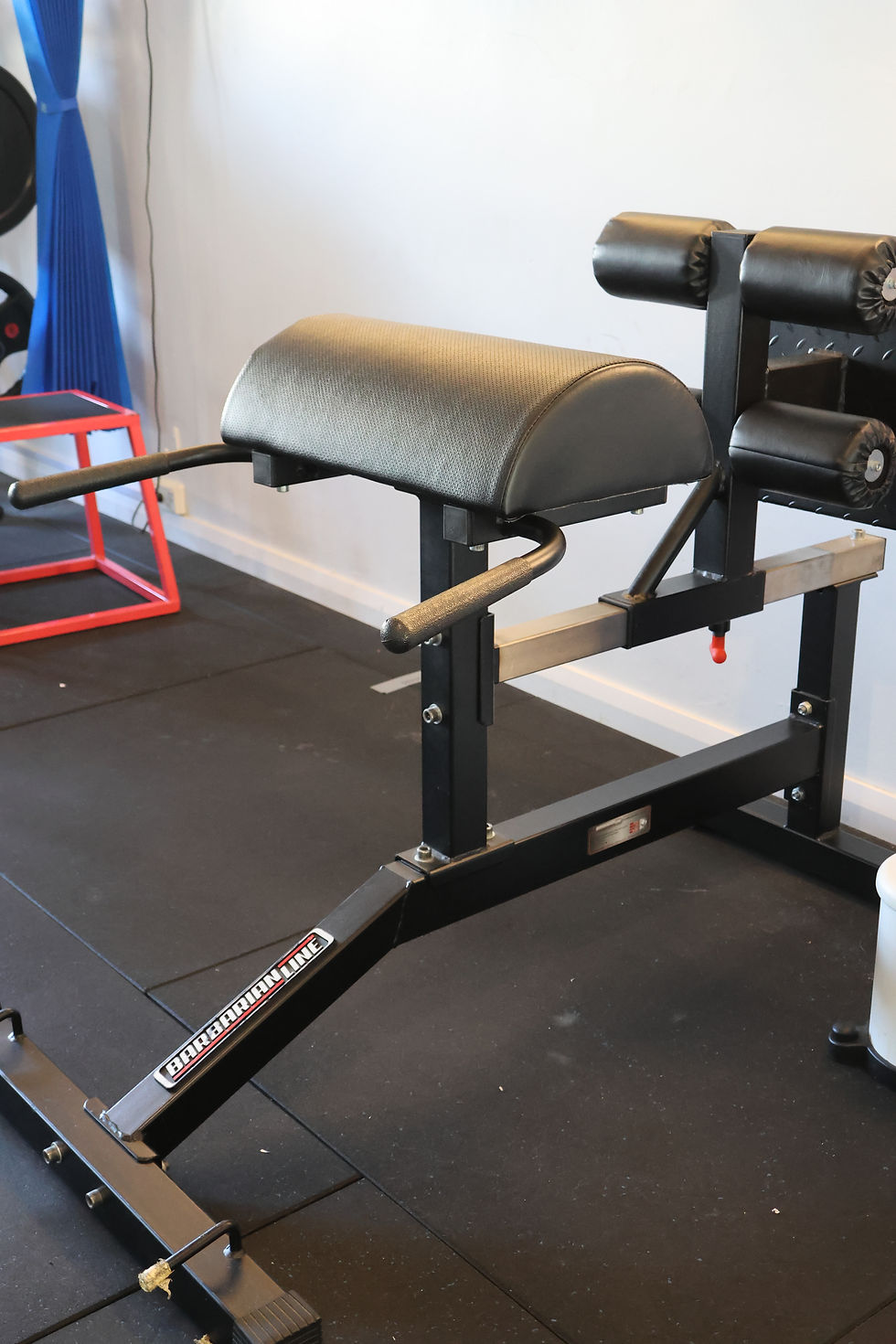
The bulk of rehab happens in the gym. We have a large gym space attached to the clinic precisely so sessions can include heavy sled work, trap bar deadlifts, split squats, Nordics, calf raises off a step, med ball throws and plyometrics. A hamstring that tore at high speed needs to be exposed to high-speed running again before you trust it. A shoulder that dislocated needs load overhead, not just band work.
Session frequency usually drops in this phase. Plenty of people move to fortnightly as their own training takes over, coming in for progression and retesting rather than treatment. Others with a complex knee or a workers compensation claim keep weekly contact. It depends on how much supervision the program needs.
Retesting is the honest bit. If your injured leg is producing 70 percent of the other side on a single-leg press or hop test, that's a number, and it tells us what to do next. Feeling fine and testing fine are not the same thing, which is why we prefer to measure.
Return to sport: graded, sport-specific, and not the last session
Return to sport work looks like your sport. Change of direction drills for netball and football, acceleration and max velocity running for field sports, throwing programs for cricket and baseball, sled and compromised-running work for HYROX athletes.
We build it around your season. Someone six weeks out from finals gets a different plan to someone injured in round two. A return-to-play conversation covers what we've measured, what the risk profile looks like, and what to watch for in the first few games back. Nobody can promise an injury won't recur, but you should understand what you're walking into.
Funding and referrals
Our Five Dock clinic treats private patients, CTP (motor vehicle) claims, workers compensation, NDIS participants and EPC/Medicare referrals from a GP. You don't need a referral to see a physiotherapist privately. Bring any scans, surgical reports or specialist letters to the first appointment.
When to get in
Worth booking if pain has lasted more than a week or two without improving, if you've had the same injury more than once, if something swelled up quickly after a specific incident, or if you're modifying your training around a niggle and hoping it sorts itself out. Also worth booking before a season starts, if you know a body part has a history.
If any of that sounds like where you're at, come in and get assessed.
Read more about our general services.
If you would like it assessed at our Five Dock clinic, you can book a free injury assessment.



Comments