
Hamstring Strains This Winter: Why Weekend Athletes Keep Re-Injuring Them

Winter is peak season for weekend sport across Sydney's Inner West — Saturday AFL and rugby, Sunday football, midweek netball and touch. Every year around this time, our clinic sees the same pattern repeat: a noticeable rise in hamstring strains. It's consistently one of the most common soft-tissue injuries in field sports, and unfortunately, it's also one of the most likely injuries to return if it isn't rehabilitated properly.
If you've felt that sudden grab at the back of your thigh sprinting for a ball, or pulled up short chasing down an opponent, you're in good company. Here's what's actually happening in the muscle, why hamstring strains have a reputation for coming back, and what a more structured approach to rehab looks like.
Why the Hamstring Takes the Hit
The hamstring group runs down the back of the thigh and works hardest in two very different ways during sport — contracting powerfully to drive you into a sprint, then lengthening under load to control the leg as it swings through and decelerates. That combination of high force and rapid lengthening is exactly when strains tend to occur, most often in biceps femoris, typically during maximal sprinting or with sudden overstretching such as a lunging tackle, a mistimed kick, or a quick change of direction.
Not All Hamstring Strains Are the Same
Hamstring strains are generally graded from I to III depending on how much muscle fibre is affected, from a mild strain with minimal disruption through to a more significant tear. Recovery timeframes vary widely between individuals and depend on the grade, the exact location, and how the injury is managed early on — which is exactly why a proper clinical assessment matters more than guesswork or a generic “two weeks off” approach.
The Mistake We See Most Often
Hamstring strains have one of the highest recurrence rates of any sporting injury, and in our experience, the biggest contributor is treating “pain-free” as the same thing as “ready.” Resting until it stops hurting, then jumping straight back into full-intensity training or a game, skips the part of rehab that actually rebuilds the muscle's capacity to tolerate sprinting again — strength, length-tension control, and confidence under load.
Testing the Muscle Instead of Guessing
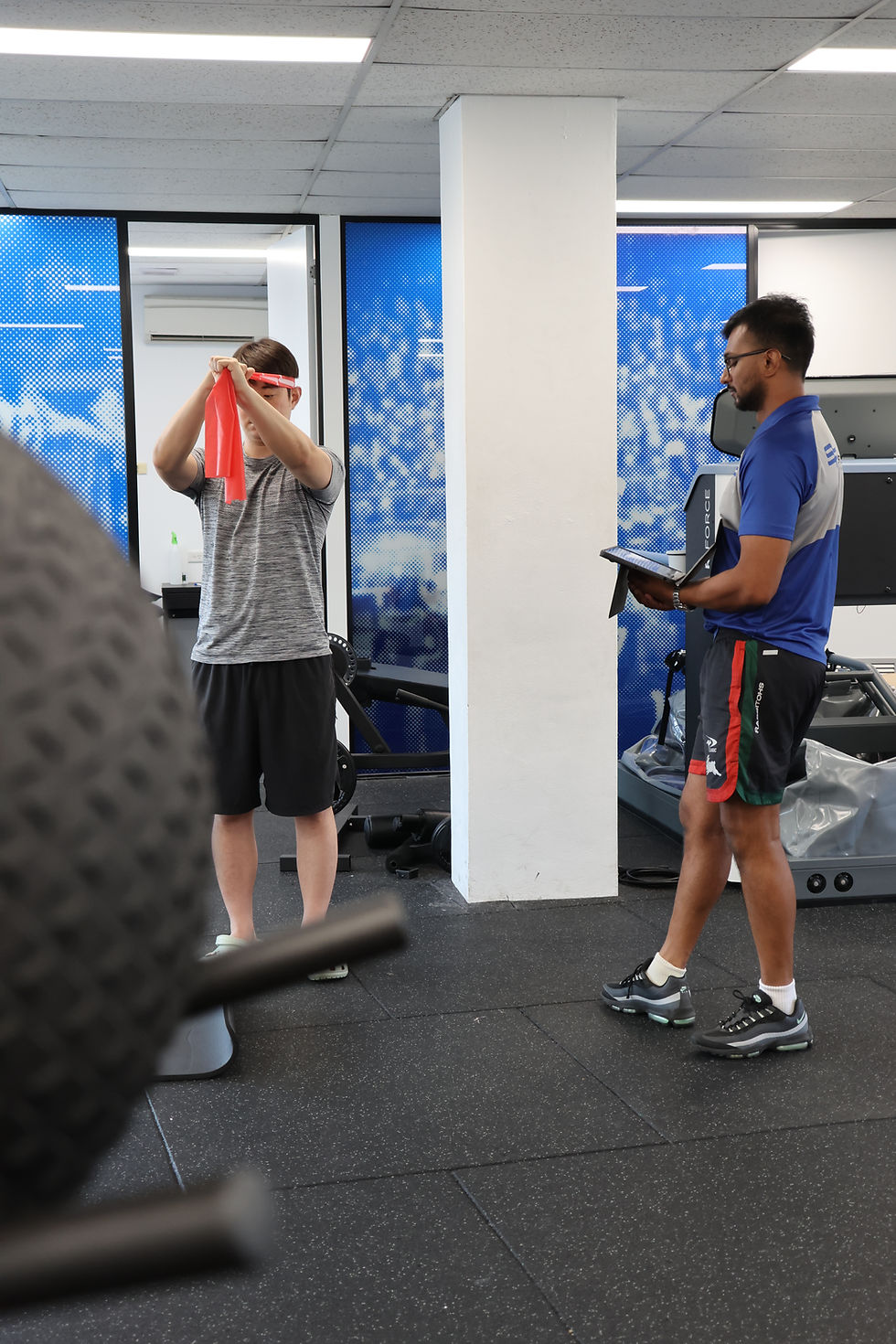
Rather than relying purely on how a hamstring feels, we use VALD ForceFrame in clinic to objectively measure isometric hamstring strength and compare the injured side to the uninjured side. Tracking these numbers through rehab can give the athlete and clinician a clearer picture of progress than pain reports alone, and may help inform decisions around return to running and return to sport — always alongside a full clinical assessment, not as a stand-alone test.

A thorough hamstring assessment typically looks at:
Sprint mechanics and running technique
Hip, pelvis and lumbar spine control
Isometric and eccentric hamstring strength, including side-to-side comparison
Tolerance to progressively loaded running and sprinting drills
Rebuilding Running Capacity Without Setting Yourself Back
Getting back to full-speed running too early is one of the most common ways a hamstring strain becomes a recurring one. We use a graded return-to-run program that progressively increases speed, distance and change of direction, and for some athletes, our anti-gravity treadmill allows earlier controlled running at reduced body weight, which can help maintain running fitness and mechanics while the muscle continues rebuilding capacity. If running-related lower limb injuries are a recurring theme for you, our sister clinic Inner West Anti-Gravity Treadmill specialises specifically in this kind of return-to-run rehab.
Reducing the Chance of a Repeat Strain
Prevention can never be guaranteed, but a few habits consistently show up in athletes who manage their hamstrings well over a season:
Building eccentric hamstring strength before and during the season (Nordic-style loading)
A sprint-specific warm-up rather than just general jogging and static stretching
Managing sudden jumps in training or game load, especially after a break
Addressing hip and lower back control, not just the hamstring in isolation
Reviewing footwear and playing-surface changes that alter loading patterns
If Your Hamstring Is Niggling, Get It Looked At Properly
Whether you've just felt a strain this weekend or you're carrying a hamstring that keeps flaring up every few games, an early, objective assessment gives you the clearest picture of what's going on and what your rehab should look like. Book a Free injury assessment with the team at SportsFit Health & Rehab in Five Dock, and we'll help you get a proper plan in place before round two.


Comments