
Plantar Fascia Rupture Treatment: Five Dock Guide


A plantar fascia rupture is not a bad case of plantar fasciitis
Plantar fascia rupture treatment starts with getting the diagnosis right, because the injury behaves very differently to the chronic heel pain most people arrive with at our Five Dock clinic. Plantar fasciitis (more accurately plantar fasciopathy) builds slowly, hurts most in the first few steps of the morning and eases as the tissue warms up. A rupture is a single moment. The fascia, a thick band of connective tissue running from the heel bone to the base of the toes, partially or fully tears under load.
People usually describe a sudden sharp pain or tearing sensation in the arch or just in front of the heel, sometimes with an audible pop. Push-off becomes difficult straight away. Over the next day or two, bruising can appear along the arch and into the midfoot, along with swelling that a gradual-onset fascia problem rarely produces.
How it happens
Most ruptures we see follow one of a few patterns. A sprinter or a footballer loads the forefoot hard from a standing start. A basketballer lands from a jump with the toes extended. A tennis player pushes off laterally on a hard court. The common thread is a high, fast load through a fascia that was already carrying some level of degeneration.
Two risk factors come up often in the history. The first is long-standing plantar heel pain that had been grumbling for months before the pop. The second is a history of corticosteroid injection into the plantar fascia, which is a recognised association in the orthopaedic literature and one reason many clinicians are cautious with repeated injections. Higher body weight, a sudden jump in training volume and stiff ankles that force the foot to do more work also feature.
What assessment looks like
The history does a lot of the work. We want to know the exact mechanism, whether you heard or felt anything, how quickly swelling and bruising came on, and whether you could weight-bear afterwards. Prior heel pain and any injections matter here.
On examination we palpate along the fascia from its attachment at the medial calcaneal tuberosity through the mid-substance, looking for a focal defect, a step in the tissue or a boggy area of swelling. The windlass test, where the big toe is extended to tension the fascia, often reproduces pain in fasciopathy but may feel oddly slack or provoke pain in a different spot when the fascia is torn. We check ankle dorsiflexion, calf strength, first ray mobility and single-leg balance, then compare sides.
Imaging is frequently useful. Ultrasound can show fascia thickness and a discontinuity, and it can be done dynamically. MRI gives better detail if the picture is unclear, if there is concern about a calcaneal stress fracture, or if the tear looks full-thickness. We refer for imaging when the clinical findings need confirmation rather than as a default first step.
Differential diagnoses worth ruling out include calcaneal stress fracture, fat pad contusion, flexor hallucis longus or flexor digitorum injury, Baxter's nerve entrapment and tarsal tunnel irritation. They can all produce heel or arch pain and none respond well to a rehab plan built for the wrong tissue.
Early management
The first phase is about offloading without shutting the foot down completely. Depending on how much pain you have on weight-bearing and what imaging shows, that can mean a walking boot or a stiff-soled shoe for a period, crutches for the first few days, heel lifts, taping to support the arch, and simple swelling management. Short-term relative rest is the goal, not weeks of doing nothing.
While the foot is protected, training does not have to stop. We keep the calf, hip and trunk working, use upper body and bike conditioning where the foot tolerates it, and start isometric loading of the intrinsic foot muscles and calf when symptoms allow.
Rehab stages and returning to sport
As pain on palpation settles and you can walk normally in shoes, loading progresses in a fairly predictable order. Heel raises on two legs, then one. Toe flexor work with a towel or slant board. Calf capacity built to something like repeated single-leg raises through full range. Then hopping and low-level plyometrics, ankle stiffness drills, and finally sprint mechanics and change of direction.
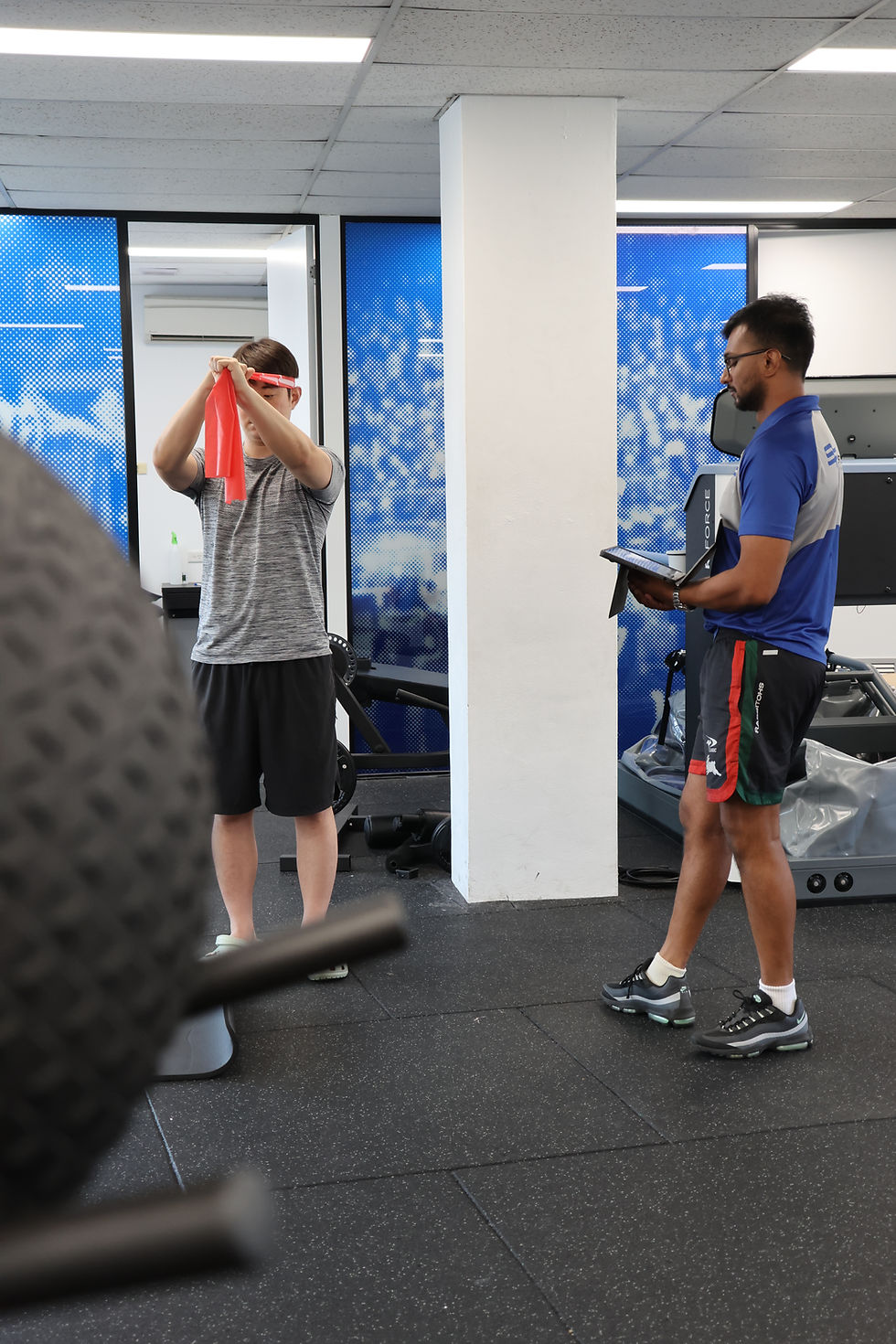
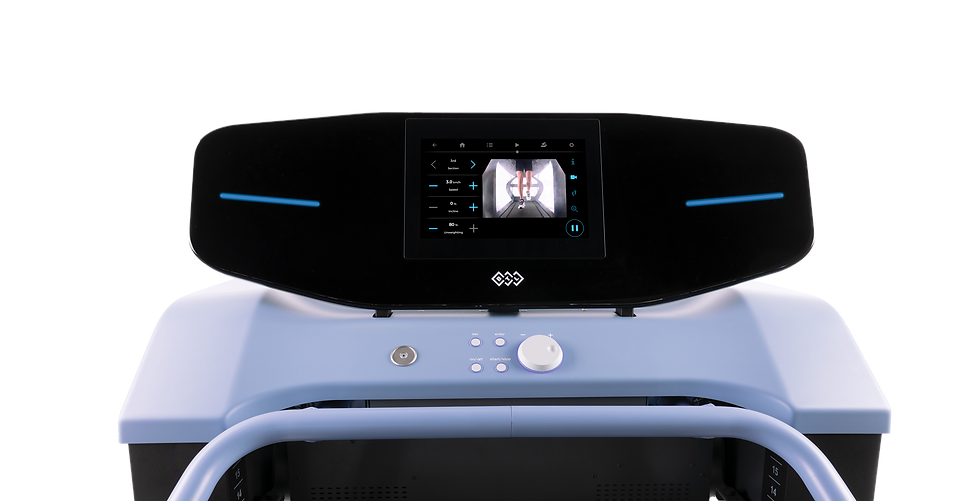
Our Five Dock gym space lets us run that progression properly rather than handing over a sheet of exercises. The anti-gravity treadmill is genuinely useful for this injury because it lets us reintroduce running at a reduced percentage of body weight and build up as the fascia tolerates load. AxIT force plates give us calf and single-leg push-off numbers to compare against your uninjured side, which is far more informative than asking how the foot feels.
Timelines vary a lot with the size of the tear, your sport and how much prior fascia degeneration was there. Many people spend several weeks in protected weight-bearing and several more months rebuilding running and cutting capacity. Some full-thickness ruptures settle into a foot that feels better than the chronic pain that preceded them, and some develop secondary arch flattening or midfoot symptoms that need ongoing management. That is worth planning for rather than being surprised by.
When to get it looked at
Sudden arch pain with a pop, bruising or an inability to push off deserves assessment within a few days rather than a fortnight of hoping. Same if heel pain you have had for months suddenly changes character. Bring any imaging and a note of any injections you have had into the area. If you would like the foot assessed at Five Dock, our sports physiotherapists can work through the diagnosis and map out the loading plan from there.
Read more about our lower limb services.
We go deeper on lower limb at innerwestantigravitytreadmill.com.au.
If you would like it assessed at our Five Dock clinic, you can book a free injury assessment.

Comments