
Olympic Sprinter Sarthak Bhambri Joins SportsFit

Updated: Aug 6
Sarthak Bhambri joins SportsFit Health and Rehab
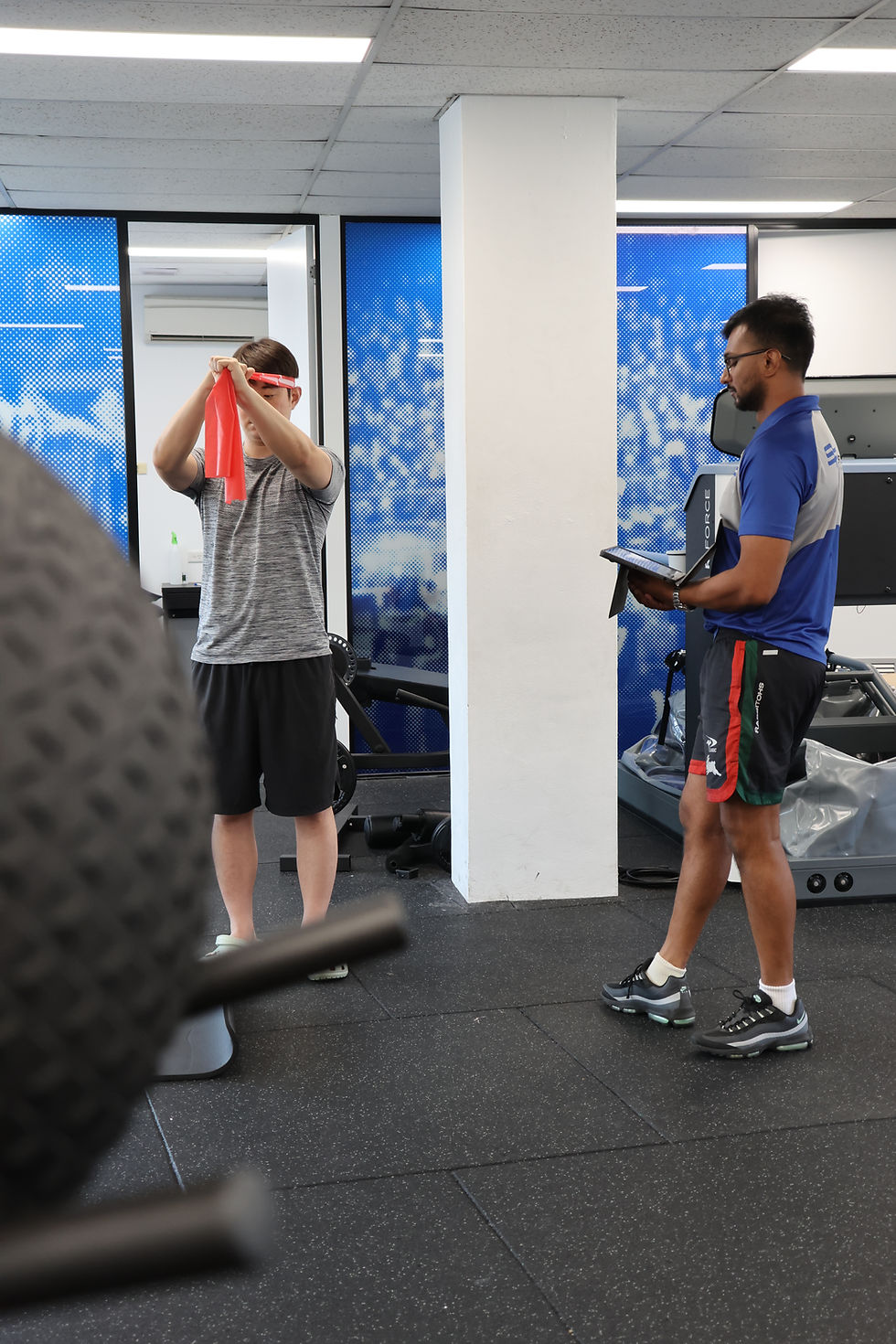
We're pleased to announce our newest partnership: Olympic sprinter Sarthak Bhambri is now working with the team at SportsFit Health and Rehab. Sarthak represented India at the Tokyo 2020 Olympic Games in the mixed 4x400m relay, and he'll be based with us for his physiotherapy, strength work and recovery support while he trains in Sydney.
He'll be seen by Sachin, Ava and Annabel across our Five Dock and Gladesville clinics.
Why we back a 400m runner
The 400m is one of the more punishing events on the track. A quality men's race is over in roughly 45 to 47 seconds, and the athlete is running near maximum velocity for the first half of it before the lactic load starts dictating terms. That combination — high-speed mechanics performed while heavily fatigued — is exactly where soft tissue injuries tend to show up.
Sprinters also spend most of the year in preparation rather than competition. A single indoor or outdoor season might involve a handful of races that matter, sitting on top of eleven months of speed sessions, tempo runs, gym blocks and travel. The physiotherapy question for an athlete like Sarthak is rarely "how do we treat this injury". It's "how do we keep the training week intact so the work actually accumulates".
Sarthak has trained through injury setbacks and through the disruption the pandemic caused to international athletics. Athletes who have had their preparation interrupted and rebuilt it more than once tend to be good communicators about their bodies, which makes the clinical work more precise.
What the support involves
Sarthak's program with us covers three areas.
Screening and monitoring. We look at hamstring and hip strength, calf endurance, ankle stiffness, thoracic and hip rotation, and how those numbers move across a training block. A drop in single-leg calf raise capacity or a shift in hamstring strength between limbs is useful information well before it becomes a symptom.
Treatment when something flares. Hands-on work, dry needling, and graded loading, chosen based on what the assessment shows on the day rather than a fixed protocol. For a sprinter, the aim is to get the athlete back to top-speed running through a progression that can be measured, not to have them guess when it feels right.
Recovery and conditioning between sessions. This includes strength programming that supports sprint mechanics, load planning around competition and travel, and practical recovery strategies around back-to-back high-intensity days.
We make no claims about how quickly any athlete returns from any injury. Sprint injuries vary enormously in how they behave, and honest timeframes come from reassessment, not from a brochure.
What sprint assessment looks like in the clinic
If you've never had a running-specific assessment, it looks different from a standard sore-hamstring appointment.
We start with the history in detail: which part of the session it happened in, what the athlete was doing at the time, whether they'd finished a block of speed work, whether it was acceleration, top-speed running or a bend. A hamstring that complains during the drive phase out of blocks behaves differently from one that goes at 40 metres at full stride.
From there we test. Range of motion at the hip and ankle, hamstring strength in inner and outer range, calf capacity, single-leg control, trunk position. Where it's appropriate we'll film running so we can look at pelvic position, ground contact and how much the athlete is collapsing on one side as fatigue builds.
The outcome of that first session is a working diagnosis, an explanation of what's happening in the tissue, and a plan for the next two to three weeks that says what the athlete can and can't do in training. Most sprinters can keep doing something — gym work, low-intensity tempo, drills — and the plan should say what.
The injuries we see most in sprinters
Hamstrings come through the door more than anything else. Then calf and Achilles issues, hip and groin pain, and lower back and SIJ irritation that tends to track back to how the athlete is holding position under load.
A few patterns are worth knowing if you sprint:
A hamstring that grabs at high speed and eases quickly is still worth assessing. Reinjury risk is highest in the weeks after a return, and rushing the top-speed progression is the common thread.
Calf tightness that only shows up in the second half of a session usually points to endurance capacity, not flexibility. More stretching rarely changes it.
Groin and hip pain in a sprinter that has built gradually over a block often responds to load review before anything else.
New back pain with any leg symptoms, night pain, or pain after a fall should be assessed promptly rather than trained through.
When to get something looked at
Book an assessment if you've had a sudden sharp pain during running and had to stop, if pain has stayed the same or worsened for more than a week, if you're altering your gait to avoid it, or if the same area has flared more than once in a season. Recurring niggles in the same spot are usually telling you something about capacity or technique rather than bad luck.
Following Sarthak's season
Sarthak will be sharing parts of his training and recovery week with us through the season, including how he structures speed days, what his gym work looks like around competition, and how he manages travel. We'll be posting those on Instagram and Facebook as the season progresses.
Welcome to the clinic, Sarthak.
If you would like it assessed, you can book a free injury assessment.


Comments