
Lower Back Pain Physio in Gladesville: A Guide


Why lower back pain sends so many people looking for a physio
Most people who search for lower back pain physio in Gladesville aren't in the middle of a medical emergency. They bent over to pick up a kit bag, felt something grab, and three days later they still can't sit through a meeting or get through a set of deadlifts. Or the ache has been building for months and now it shows up during every second game.
Lower back pain is common and, in most cases, not caused by serious structural damage. That doesn't make it trivial. Pain changes how you move, and how you move changes what your back tolerates next week. The point of assessment is to work out which tissues are irritated, what load they're currently coping with, and what you can do in the meantime without making things worse.
What actually tends to be going on
A few patterns come up repeatedly in active adults:
Disc-related pain. Often felt central or slightly to one side, worse with sitting, bending forward and getting out of the car in the morning. Can refer into the buttock or leg if the nerve root is involved.
Facet joint irritation. Usually more localised, one-sided, and aggravated by extension and rotation. Cricketers, tennis players and anyone who repeatedly arches and twists under load will recognise it.
Muscular and myofascial pain. Sudden onset after a heavy session or an awkward lift. Frequently settles reasonably well but leaves you guarded and reluctant to load again.
Bone stress in younger athletes. In teenagers doing high volumes of extension-based sport (fast bowling, gymnastics, diving), persistent one-sided back pain needs proper attention rather than a rest-and-hope approach.
Load error dressed up as an injury. A jump in training volume, a pre-season block that started too fast, a return to running after months off. The back is often just the part that complained first.
What assessment looks like at our Gladesville clinic
The first appointment runs about 45 minutes and is one-to-one, with no double-booking. Most of the early part is conversation, because history usually narrows the field faster than any single test. How it started, what makes it worse within a day and what makes it worse over a week, how it behaves overnight, what your training or work week actually looks like, and what you're trying to get back to.
Then we look at movement. Lumbar range in each direction, hip mobility, how you load a squat and a hinge, single-leg control, and how your trunk behaves when you're tired rather than fresh. We screen for neural involvement where the history suggests it: strength, reflexes, sensation. We also screen for the small number of presentations that need medical referral or imaging rather than physiotherapy first, including unexplained weight loss, night pain, trauma, fever, or changes in bladder and bowel function.
Where objective numbers help, we use them. Our AxIT force plates measure how you distribute load between left and right in a squat or a hinge, and the VALD ForceFrame gives repeatable hip and trunk strength readings. Those numbers give us a baseline to compare against in four or six weeks, which is more useful than asking whether things feel a bit better.
What treatment involves
Early on, the aim is usually to reduce irritability enough that you can move more. That might include hands-on work, specific positions and movements that ease your symptoms, and clear guidance on what to keep doing rather than a blanket instruction to rest. Sitting still for a fortnight rarely helps a back, and it tends to make the return harder.
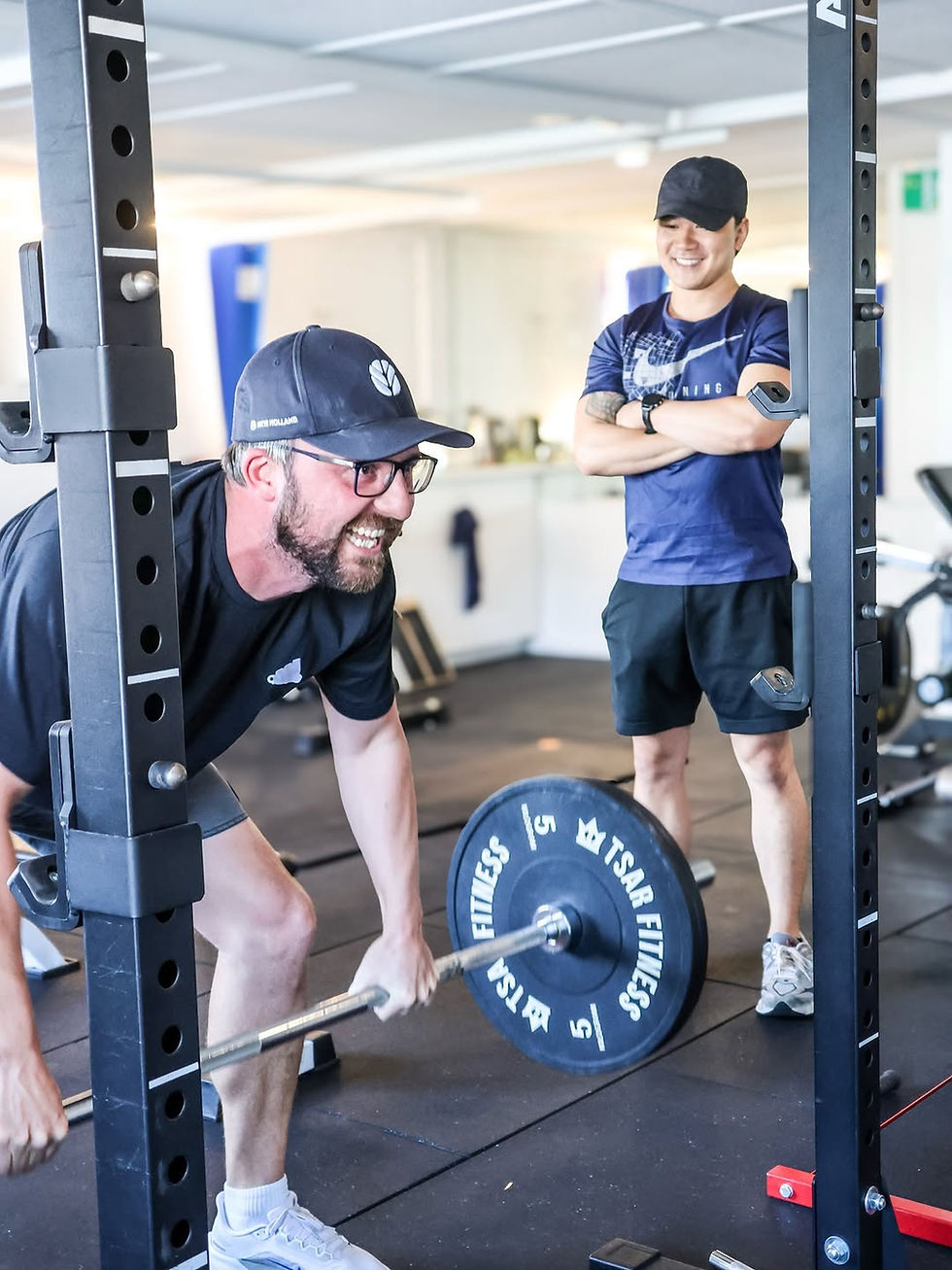
From there the work shifts to loading. Hip and trunk strength, hinge and squat patterns retrained with load you can actually tolerate, and graded exposure to whatever movement currently feels threatening. We have a large gym space at Gladesville, so this happens in the session with you under load rather than on a printed sheet you take home. If running is part of your sport, the anti-gravity treadmill lets us reduce bodyweight through the early stages of a running return and build from there.
Timeframes vary a lot between people and presentations. Some acute episodes settle within a few weeks; longstanding pain with a long history of flare-ups usually takes a longer, more structured block of work. We'd rather set expectations honestly at the start than name a number we can't stand behind.
When to get it looked at
It's reasonable to give a mild episode a week of sensible movement and see what happens. Get assessed sooner if pain radiates below the knee, if you have numbness, pins and needles or weakness in the leg, if it followed a significant fall or collision, if you're waking regularly at night because of it, or if this is the third or fourth episode this year. Repeat flare-ups are usually a signal that capacity hasn't caught up with what you're asking of your back.
We see private patients as well as CTP, workers compensation, NDIS and EPC/Medicare referrals at Gladesville. If your back has been limiting training, work or sport, book an assessment and we'll work out where you're actually up to.
Read more about our back services.
If you would like it assessed at our Gladesville clinic, you can book a free injury assessment.


Comments